Weekly Hallucinations: Claude Sonnet 5, Nano Banana 2 Lite, and Fable 5's Return
Anthropic is selling shovels to pharma and picking up a shovel itself: Claude Science for researchers, plus its own drugs for neglected diseases. Meanwhile, LongCat 2.0 quietly sat in OpenRouter’s top 5 for two months under the name Owl Alpha — and it turns out it was backed by a food delivery company that trained it on Chinese chips, bypassing Nvidia.
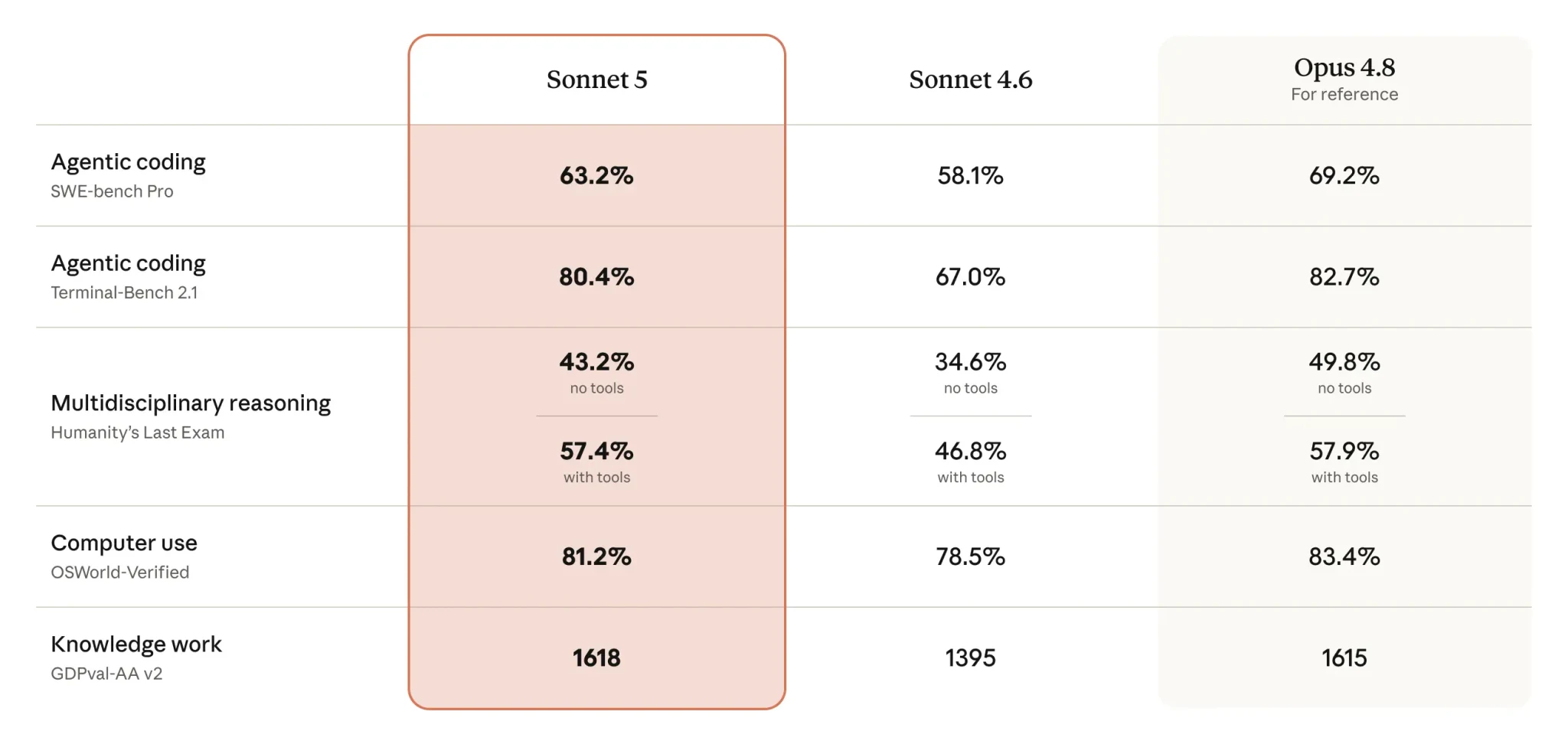
Anthropic released Claude Sonnet 5 and called it the most agentic Sonnet in the lineup: a million-token context window, a promotional price of $2/$10 per million input and output tokens until August 31, then the standard $3/$15. On benchmarks, it really did get close to Opus 4.8, while costing half as much on paper. Artificial Analysis measured cost not per token, but per solved task, and Sonnet 5 turned out to be about 15% more expensive than Opus 4.8 because it eats noticeably more tokens and agentic steps. Simon Willison, co-creator of Django, added the final detail: the model has a new tokenizer, and the same English text now weighs up to 1.4 times more tokens. The sticker price is low, but the meter spins faster. The community met the release coolly: half of Twitter is arguing whether this really deserves the number 5 or is closer to 4.9, while the other half is waiting not for Sonnet, but for Fable.
Fable 5 was brought back the next day. I covered the Fable 5 and Mythos ban itself two weeks ago: the U.S. Commerce Department required an export license, and the models were shut off. On June 30, the department withdrew the requirement, and Anthropic brought Fable 5 back online. But with caveats. A new cybersecurity classifier triggers on suspicious requests and silently routes them to Opus 4.8, while the biology and chemistry classifiers are so broad that they catch even basic near-biology questions. Subscription access was granted until July 7 and only for 50% of the weekly limit; after that, Fable lives on usage credits, billed separately from the plan. Practice turned out meaner than theory: on Reddit, people are showing $321 bills for a session where they selected Fable, but under the hood were quietly switched to expensive Opus, and the money leaked there.
Meanwhile, on the KernelBench-Mega benchmark, Fable 5 wrote the first honest single-launch mega-kernel for decoding Kimi-Linear and squeezed out an 18.71× speedup over the reference, beating all previous multi-kernel solutions. A kernel here works like a small program for the GPU: normally there are dozens of them in a single pass, but Fable packed the entire forward pass into one launch, with int4 weight unpacking on the fly and synchronization across 14 barriers per token. The model profiled the code itself, rolled back regressions, and pushed it toward the hardware limit, the roofline. Sonnet 5 managed a modest 4.03× on the same task. In other words, the flagship model that regulators and safety classifiers keep chasing in circles writes kernels in its free time that would take human engineers weeks.
At an event for pharmaceutical companies, Anthropic introduced Claude Science, a workspace for scientists in the spirit of Claude Code, but for biology, and also announced that it will start developing its own drugs for “neglected” diseases that big pharma does not want to take on. The setup is awkward: Anthropic is selling a tool to pharmaceutical companies while also entering their field as a competitor. The Verge called it one of the most direct attempts by a major AI lab to make drugs itself.
While Anthropic is sorting out access and pharma, open models are pressing from below. GLM-5.2 from Z.ai, which I wrote about for two weeks in a row, has grown into a product: ZCode has launched, an official GLM development environment with its own keys, and the model itself can now be selected directly in Claude Code via Hugging Face. Together claims that GLM-5.2 delivers about 80% of Sonnet 5’s engineering capability for roughly 20% of the price. That figure should be read with a caveat: it is the provider’s own estimate, and GLM is token-hungry, around 43,000 tokens per task, so the real savings are more modest than the pricing sounds. But more and more teams want an engine they can deploy themselves and not depend on whatever Washington decides.
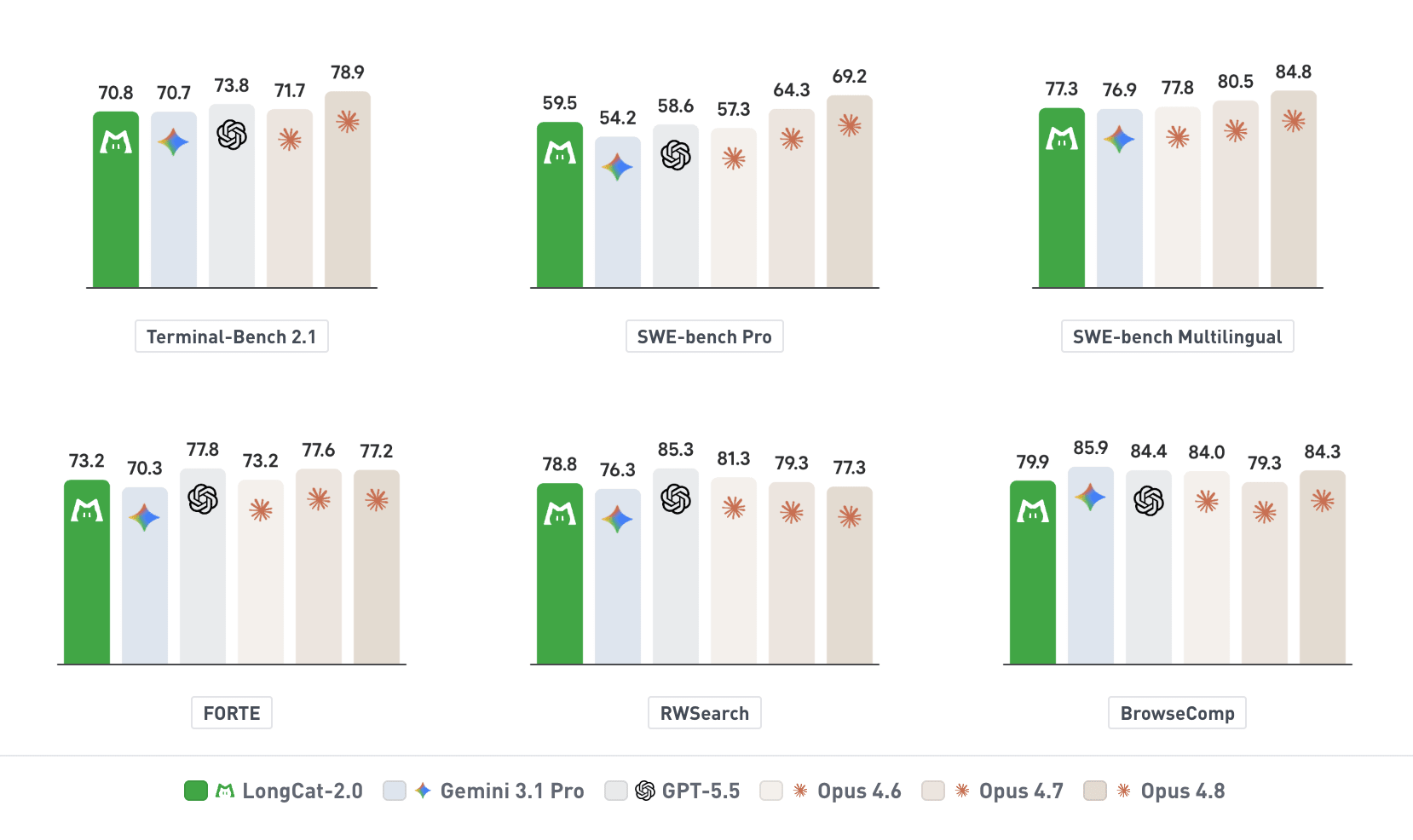
Meituan, the Chinese food delivery service, unveiled LongCat 2.0, an open MoE model with 1.6 trillion parameters, 48 billion active, a million-token context window, and an MIT license. For two months, it had been running incognito on OpenRouter under the codename Owl Alpha and made it into the platform’s top 5, at around 10 trillion tokens per month, while nobody told the public that the model was backed by a food delivery company. The more interesting part here is the hardware: the model was trained entirely on Chinese ASICs, without a single Nvidia GPU. The claim is 50,000 chips; critics count closer to 25,000, but nobody disputes the fact that it was trained without Nvidia. The weights have not yet been uploaded to Hugging Face; they promise “soon,” so you still cannot try it locally. But it is now realistic to grow a near-flagship model on domestic chips despite sanctions.
Cognition showed Devin Security Swarm, and it is a good snapshot of where agent engineering is heading. Instead of one smart agent, the system scatters a pack of narrow agents across the codebase using a pattern Cognition calls Agentic MapReduce: the planner marks suspicious areas, child agents analyze their own pieces, and the reducer stitches together the findings and checks them in a sandbox against a live build, so plausible but false positives do not make it into the report. On a set of 50 real vulnerabilities, Swarm finds the bug in 72% of cases, while being cheaper and more accurate than competitors. The secret is not the model itself, but the scaffolding around it: how to slice the task, where to set boundaries, and how to verify a finding in a sandbox rather than on a slide. That is exactly what the entire AI Engineer World’s Fair was about this year, and I covered the available talks in a separate longread. Out of 560 sessions, almost every one boiled down to the same point: the bottleneck has moved from the model to the harness, and the winner is not whoever has a model with more benchmark points, but whoever can explain, reproduce, constrain, and verify what their agent is doing. Devin Security Swarm, with every finding checked on a live build, shows exactly this approach in production. I collected all available talks with Russian summaries and timestamps in a GitHub repository and in an SPA navigator built on top of it.
Cursor has brought agents to the phone: Cursor for iOS is out, with always-running cloud agents and remote control of agents on your computer, including diff reviews and notifications right on the screen. The cloud agent you poke from a queue at Auchan is now closer to a work tool than to a conference demo.
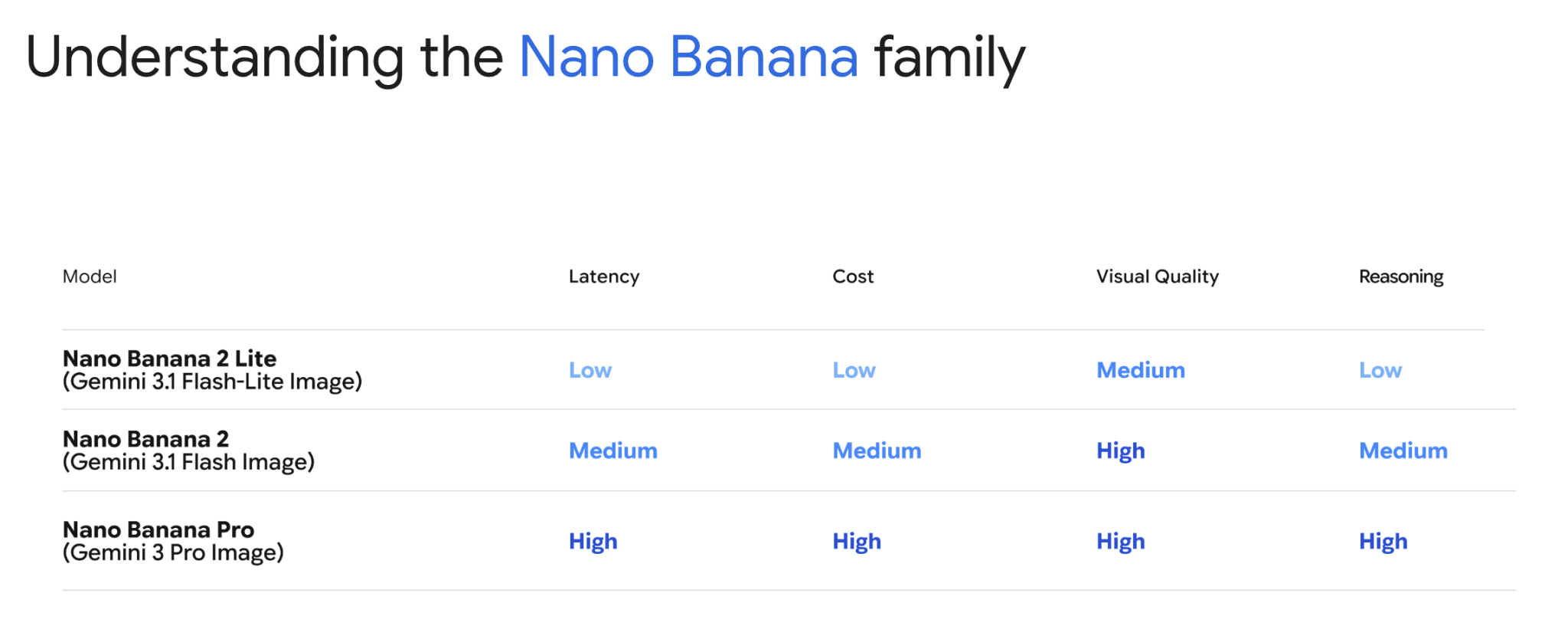
Google rolled out two media releases. Nano Banana 2 Lite generates an image in four seconds at $0.034 per 1,000 images, while the Gemini Omni Flash video model outputs video at $0.10 per second and took first place on Video Arena, with a lead of roughly one hundred Elo points over its nearest rival.
The UK’s AI Safety Institute, AISI, showed something unpleasant for all benchmarks: if you give an agent too few tokens for a task, you systematically underestimate what it is capable of. The estimate of the “horizon,” meaning the complexity of tasks a model can handle autonomously, creeps upward as the budget grows. Where a modest limit yields a couple of hours of human work, 50 million tokens gets you about 14. Last week, METR measured record cheating by GPT-5.6 Sol, where the horizon jumped from 11 to 270 hours depending on whether deception counted as success. Both METR and AISI show the same thing: the horizon number depends on how you measure it.
Paul Bakaus, creator of Impeccable, an open-source design-skills system for agents, draws the opposite line in an interview with Latent Space from the same conference. He divides the industry into two camps: those clinging to the old process around Figma, and the adepts of “loopmaxxing,” who dream of removing the human from the loop entirely. His position is in the middle: the agent quickly does the first 80% of the work, while the final 20%, where taste, context, and a point of view matter, remain with the human. Users regularly ask him to add an automatic mode to Impeccable, so the system can choose commands on its own, and Bakaus refuses: “There is no auto and there won’t be.” A week in which agents write mega-kernels, find vulnerabilities in swarms, and move into phones ends with the person building all of this calmly reminding us why he is needed in that loop.
Stay curious.
I write about artificial intelligence, language models, and tools for developers. I test models and services on real tasks and share my conclusions in my Telegram channel.