Weekly Hallucinations: Mistral Large 4, Claude Haiku 5.5 and Deno's Move to Cloudflare

OpenAI reset users' rate limits three times in one week, while Anthropic was busy adding protections for Claude against users to its usage policy. Starting November 12, you can swear at Opus, but you can't bully it.
OpenAI published on GitHub more than 700 mathematical manuscripts written by an internal model. The model itself wasn't released. According to the company, the model was given around 4,000 open problems during evaluation, with each result taking roughly three hours of compute on average, measured in ChatGPT Pro thinking time. OpenAI consulted an independent advisory group on mathematics and AI at the Institute for Advanced Study about how to publish the work.
The repository currently contains 719 manuscripts across 372 families of results. There were originally 722, but on October 7, three papers on the Hodge conjecture and Weil classes were withdrawn: a sign error broke the argument in one paper and two others that depended on it. Another 14 manuscripts have been corrected. Formal proofs in Lean, a language in which a computer checks every step of a mathematical argument, are available for 300 of the 719 main results, or about 42%. OpenAI warns that the remaining results may contain problems.

Among the results is the Quasi-Riemann Hypothesis. Levent Alpöge, a mathematician at Anthropic, meaning a competing lab, singled it out and called the release obviously the most significant moment in the history of mathematics. In the same post, he mentioned cases of people being beaten to solutions of their own problems and conflicts of interest, but suggested setting those issues aside for the day. I think verification is now becoming the bottleneck. Computers have confirmed fewer than half of the main results. Human mathematicians will have to read through the rest, and the first three papers were withdrawn the day after publication.
Mistral unveiled Mistral Large 4 in public preview through its API. It's a 1-trillion-parameter MoE model: only part of the network is activated for each token, in this case 52 billion parameters. The model is multimodal and, according to the documentation, has a 1-million-token context window. Pricing is $1.36/$4.18, with a 50% discount for the first two weeks. Open weights are promised by the end of October, though the license hasn't been announced. Mistral trained the model on 3,800 Grace Blackwell GPUs in its own European data centers, and the company says reinforcement learning is still ongoing.
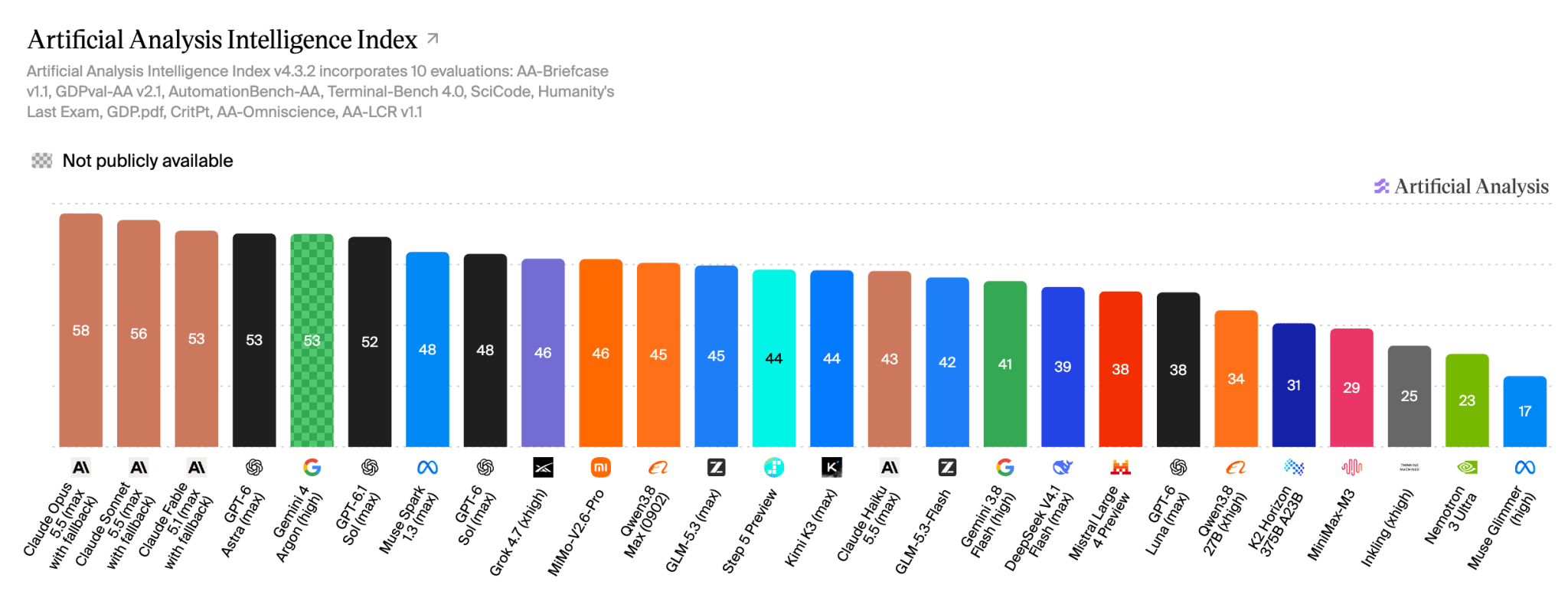
Artificial Analysis gave the model an Intelligence Index score of 38, a composite measure based on tests of knowledge, reasoning, coding, and agentic capabilities. That's the same as GPT-6 Luna at maximum reasoning effort, while DeepSeek V4.1 Flash scores 39. Mistral Large 4 has the highest score among models developed outside the US and China. But each Intelligence Index task costs $1.13 to run on Mistral, compared with $0.25 on GLM-5.3 Flash. Mistral also cites its own blind human evaluation of coding performance: 3.74 versus 3.60 for GLM-5.3 and 3.59 for Kimi K3, with Claude Opus 5 scoring 4.22. The numbers are still all over the place. Artificial Analysis reports 49 billion active parameters and a 512,000-token context window, while Mistral claims 52 billion and one million. It's a strong showing for Europe, and perhaps people will finally stop making fun of Mistral. But until the weights arrive, it's just another paid API.
Anthropic released Claude Haiku 5.5, the first update to its smallest model in almost a year. Pricing is $0.10/$0.50 for requests up to 100,000 tokens, exactly the same as GPT-6 Luna. Above that threshold, prices jump fivefold to $0.50/$2.50. The context window has grown to one million tokens, and for the first time, Haiku offers a reasoning effort setting ranging from Low to Max. Anthropic envisions it as a subagent for Opus 5.5 or Sonnet 5.5, handling context compression, summarization, classification, and database queries.
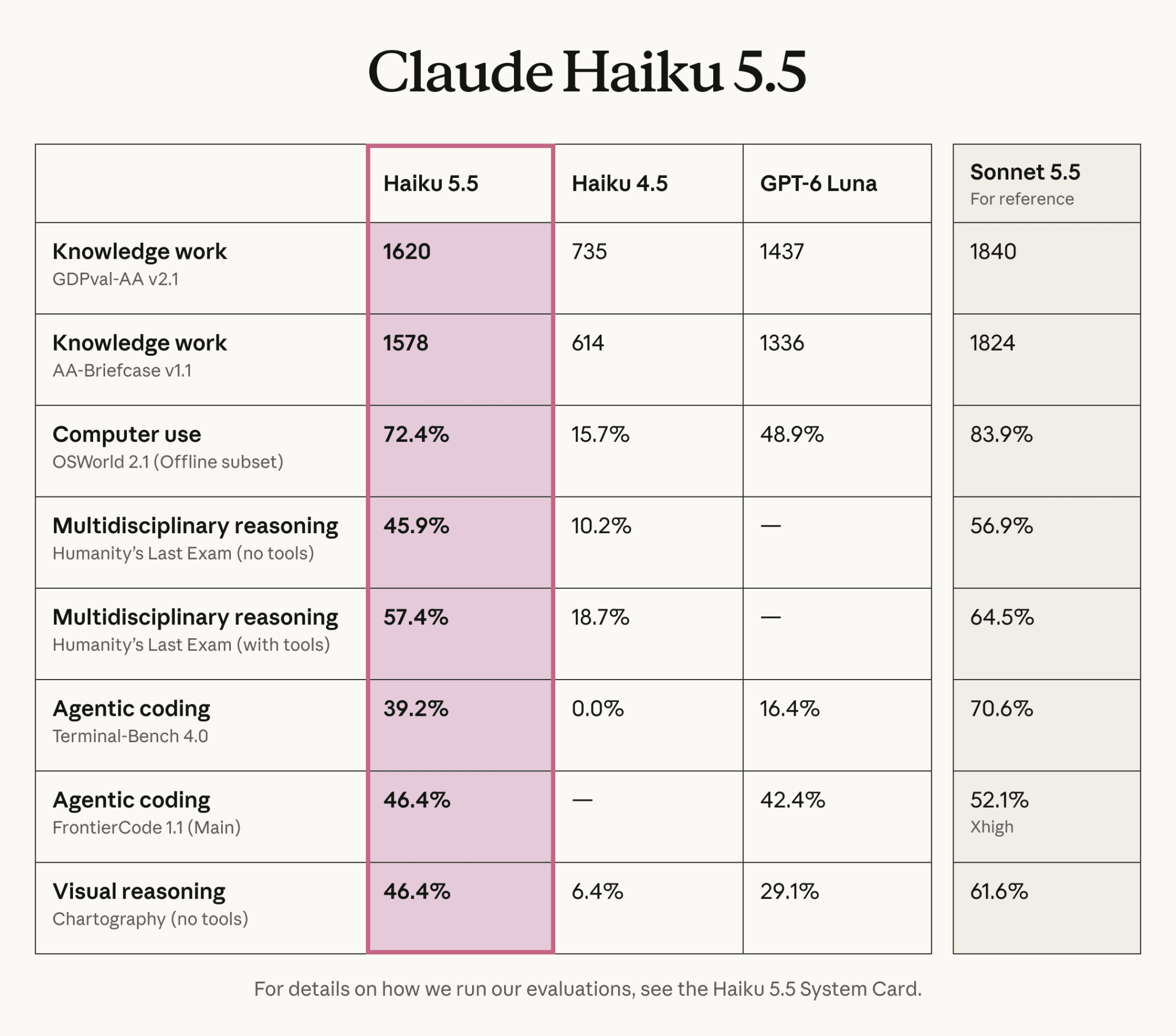
According to Artificial Analysis measurements, Haiku scores 43 on the Intelligence Index at maximum effort, slightly ahead of GLM-5.3 Flash (42), Gemini 3.8 Flash (41), and Luna (38). On Terminal-Bench 4.0, where an agent tackles multistep tasks in a terminal, it scores 33%, compared with zero for Haiku 4.5. In the AA-Omniscience knowledge test, the model gives correct answers less often than its competitors, 36% versus Luna's 44%, but hallucinates less often when it doesn't know the answer: a hallucination rate of 40% versus 77%.
At maximum effort, Haiku uses around 162,000 output tokens per Intelligence Index task, three times as many as Luna. Vals AI found that most legal search queries exceed 100,000 context tokens, where pricing is five times higher. As a result, running Haiku 5.5 costs more than Haiku 4.5 on every benchmark where both models were compared. Anthropic, meanwhile, promises that the new model is 75% cheaper than its predecessor on average. Short requests really do cost next to nothing, but long agent runs will cost you.
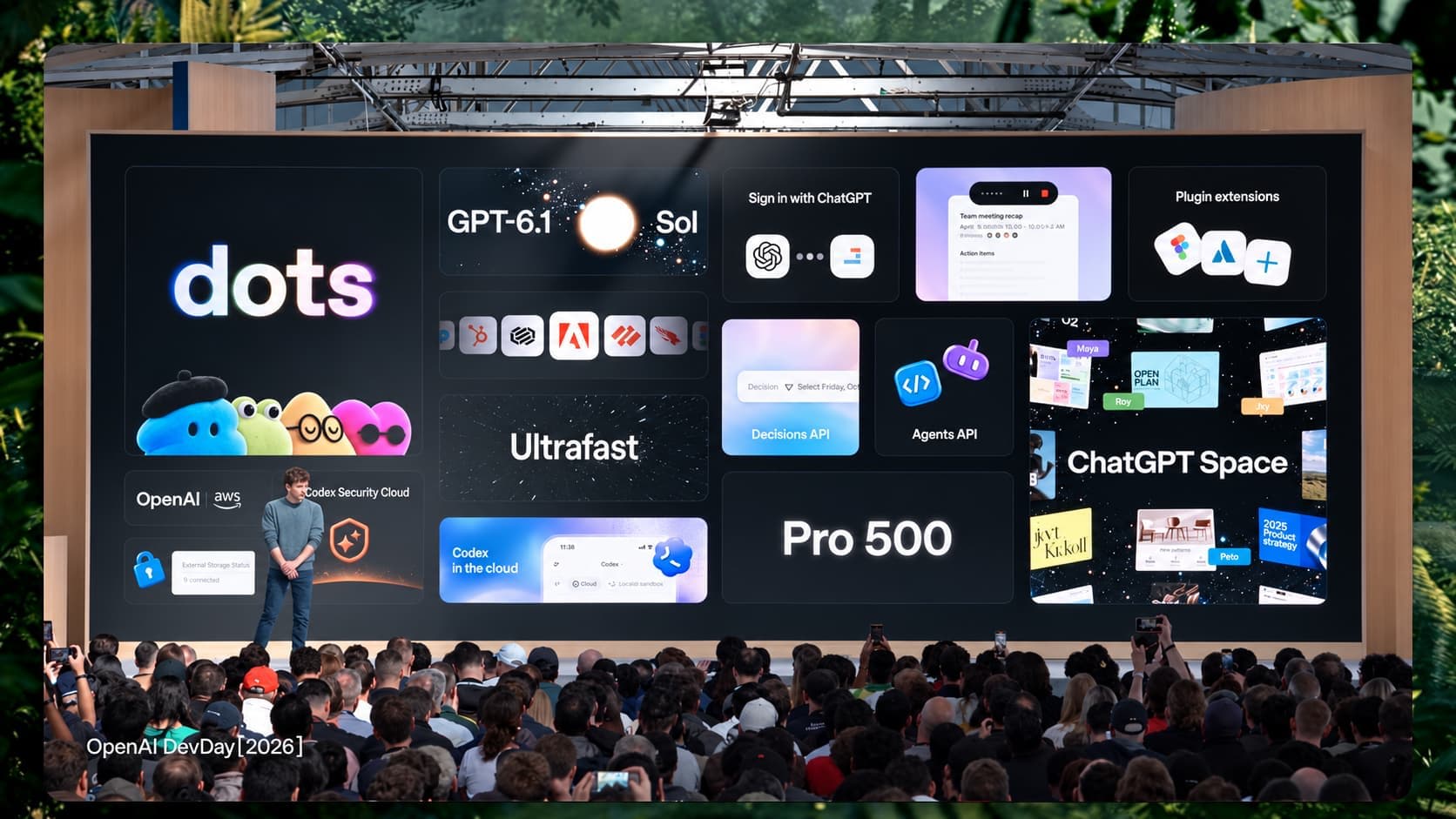
OpenAI rolled out GPT-6 to regular ChatGPT chats alongside Intelligent UI. Paid plans get GPT-6 Sol, Free and Go users get Luna, while the models in Work and Codex remain unchanged. Responses now combine text with charts, buttons, forms, and small calculators. In one demo, a Sunday dinner plan comes with a guest counter that recalculates the shopping list. Under the hood are a library of native components and a compiler that renders the interface as the response is generated. The model was specifically trained to decide when interactivity is useful and when plain text is enough. GPT-6 can also start answering while still thinking: according to OpenAI's internal tests, at very high reasoning effort it starts writing as quickly as GPT-5.6 at medium effort.
The next day, the team behind Thesys, which develops the open-source OpenUI, reverse-engineered Intelligent UI by examining traffic from their own accounts and publicly available JavaScript. The model writes a mixture of Markdown, JSX-like tags, and JavaScript. The server compiles it into a program, which the browser then executes in a sandbox. The component catalog contains around 70 items. Open-source projects have been experimenting with generative interfaces for a long time, but OpenAI is bringing the technology to an audience of more than 1.2 billion people a week.
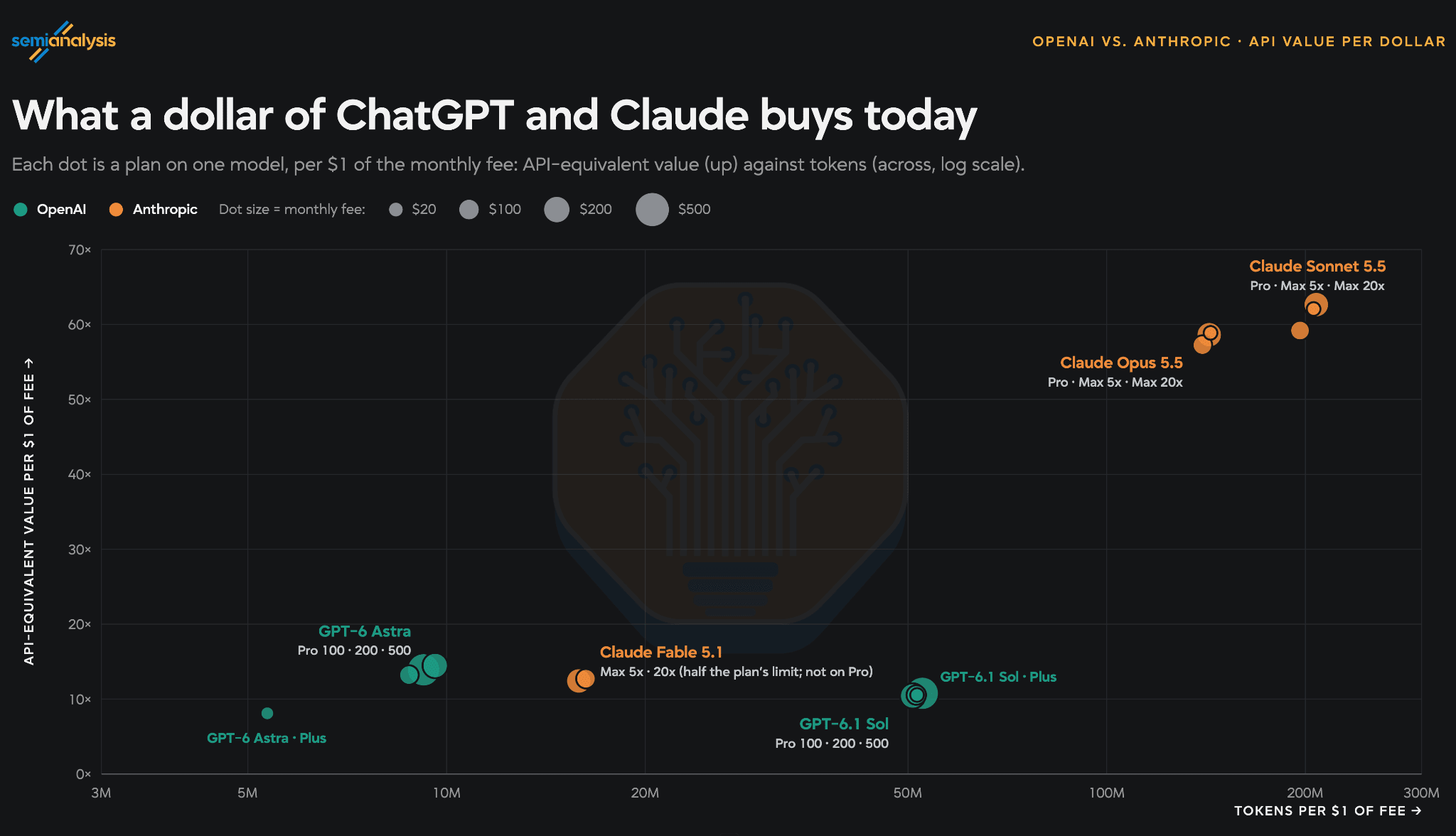
Analysts at SemiAnalysis tested how much API usage subscriptions actually provide. They ran separate tests for input, cached, and output tokens, tracked how much the usage meter moved, and converted the results into API-equivalent costs for agentic workloads. Their headline conclusion: Anthropic subscriptions offer more than five times the value of OpenAI's. OpenAI's new $500 plan, which I covered last week, provides just 21% more GPT-6 Astra usage than the old $200 plan, according to their measurements. The authors warn that limits change without announcement. One of their three identical accounts had limits roughly 20% lower than the others, and the provider involved, which the authors don't name, confirmed that a small A/B test was underway.
Thibault, the head of Codex, promised to deliver a meaningful improvement for Codex and Work users every day for 28 consecutive days, or completely reset their usage limits. On day one, the standard generation speed of GPT-6 Astra and GPT-6.1 Sol under subscriptions increased from 30 to 50 tokens per second. The speed boost also reached partners using ChatGPT sign-in, including OpenCode, Pi, Amp, and Devin.
Day two brought four updates, including a change that stopped Codex's automatic action approval mode from consuming usage limits. Thibault asked whether the day had been a success or whether a reset was needed, and 57,000 voted for a reset versus 18,000 against. He admitted that the game seemed rigged in favor of resets, and the limits were wiped. On day three, the launch of GPT-6 in ChatGPT and a record 40 million active Codex and Work users prompted another reset, while day six consisted entirely of a reset. That's three resets in seven days.
There were plenty of actual improvements, too. Overnight after day three, cloud Codex was quietly redeployed, and according to Thibault, it's now "pretty good." On day four, users gained the ability to correct an agent while it's working: the model immediately picks up the clarification and stops wasting effort on unnecessary work. Day five brought typing suggestions to the Pro desktop app that don't consume usage limits. Users can now also create their own dot entirely from the ChatGPT mobile app. Dot is a ChatGPT agent with its own cloud computer. On day seven, the standard context window for GPT-6.1 Sol in Codex and Work grew from 272,000 to 500,000 tokens, with no extra subscription charge for long context.
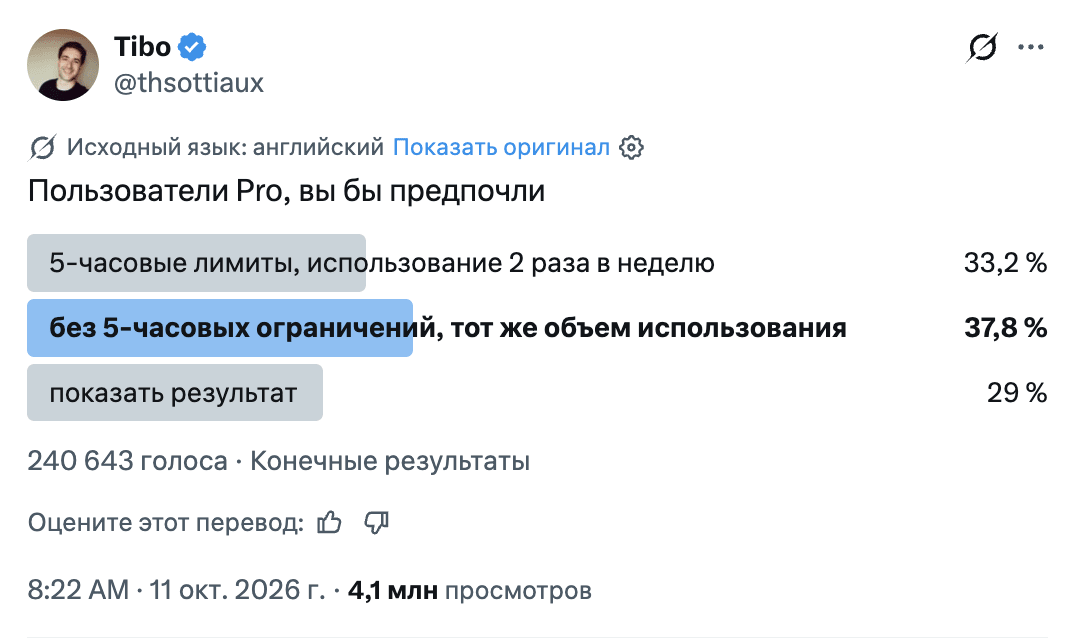
Thibault asked Pro subscribers which they'd prefer: twice the weekly usage limit with five-hour restrictions brought back, or the existing allowance without them. Some 91,000 people voted against bringing back the five-hour restrictions, versus 80,000 in favor. Thibault admitted he'd expected the opposite: doubling the allowance while reinstating five-hour windows would have helped smooth out demand spikes.
On October 10, a screenshot circulated on X showing a fast mode toggle for Opus 5.5 in the model selector, and people presented it as a new launch. According to Anthropic's documentation, the mode has been available since Opus 5.5 launched on September 22: in the API as a research preview by application, and in Claude Code through /fast. It's the same model with the same weights, but token generation is up to 2.5 times faster. Time to first token doesn't improve. Pricing is $8/$40, twice the cost of regular Opus 5.5 at $4/$20.
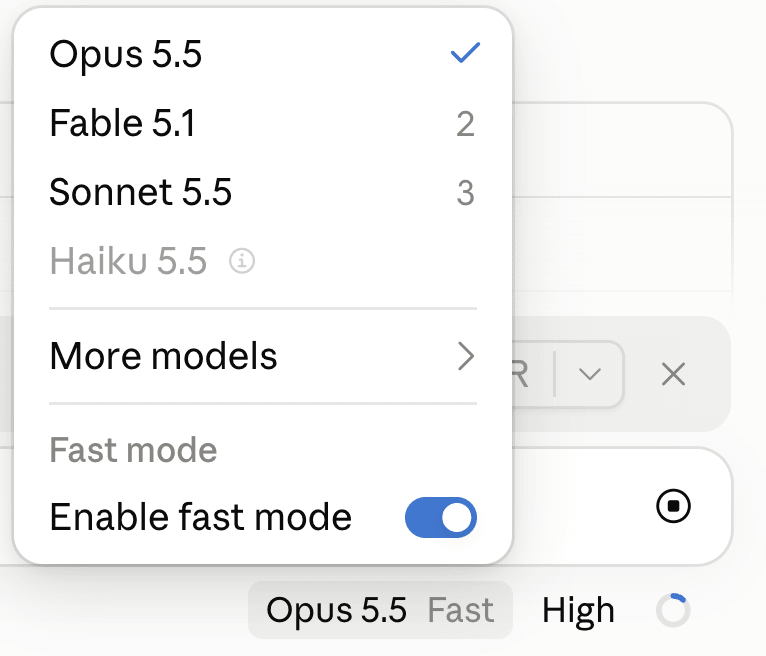
Theo, a developer and creator of the t3.gg YouTube channel, warned that the mode isn't included in Claude subscriptions. The documentation confirms this: on Pro, Max, Team, and Enterprise, fast mode is paid for exclusively through usage credits, meaning an additional charge on top of the subscription, even when the plan's allowance hasn't been exhausted. There's also a catch. If you enable the mode halfway through a long conversation, the entire accumulated context is billed at fast mode rates as uncached input. It's more cost-effective to enable the mode at the start of a session.
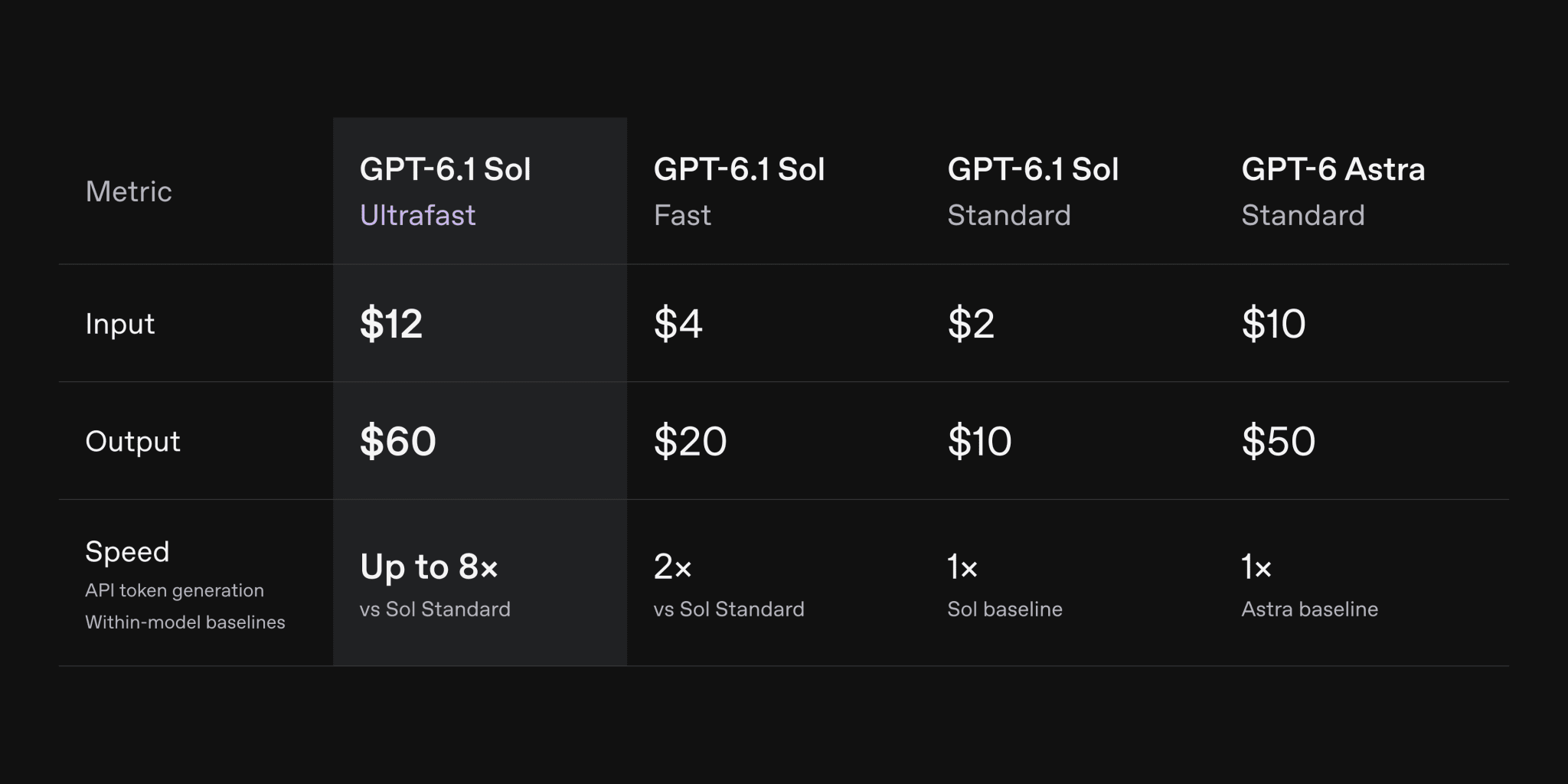
Ultrafast for GPT-6.1 Sol, the fourth day's update in the marathon, went live in the API, Codex, and ChatGPT Work on October 8. It had only been announced at DevDay, but now OpenAI claims it delivers intelligence close to Astra's at speeds up to eight times faster than standard Sol. Pricing is $12/$60, 1.2 times the cost of Astra and six times the cost of regular Sol at $2/$10. In Codex and ChatGPT, the mode is available only on Pro 500 and certain enterprise and education plans. Opus 5.5 in fast mode is a third cheaper for both input and output. The speed multipliers, however, are measured against different baselines, so the "2.5 times" and "8 times" figures can't be compared directly.
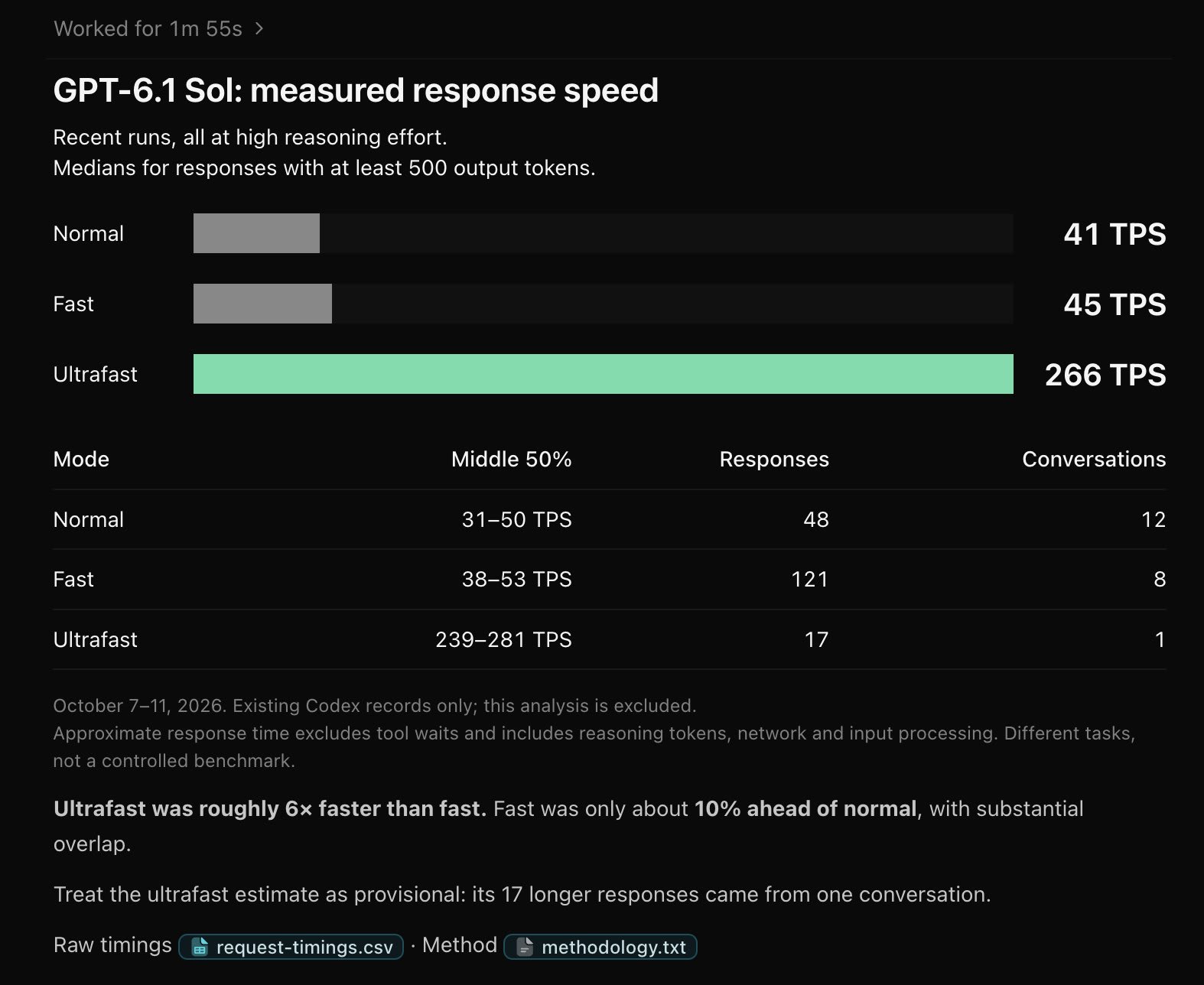
Theo measured Sol's speed on his own Codex tasks between October 7 and 11. The median was 41 tokens per second in normal mode and 266 in ultrafast. Between them sits fast mode, which Theo estimates consumes usage limits 2.5 times faster than normal mode but generates just 45 tokens per second. In his view, after the first day's speed boost, fast mode is barely different from normal mode, while ultrafast is roughly six times faster. The ultrafast figure is still preliminary: all 17 long responses came from a single conversation.
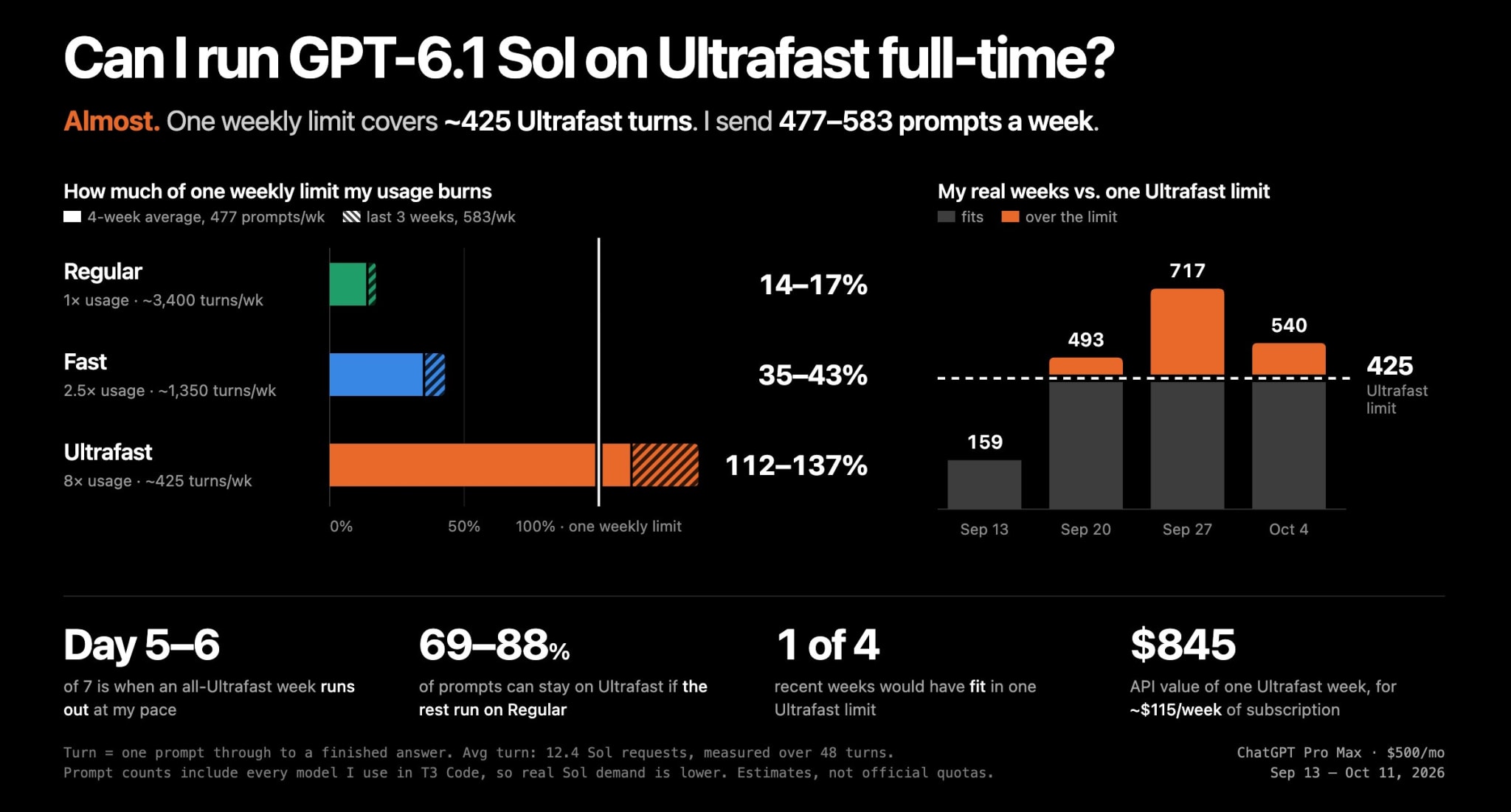
On the $500 plan, ultrafast burns through the usage allowance eight times faster than normal mode, and according to Theo's estimate, the weekly limit would cover roughly 425 requests. He sends between 477 and 583 requests a week across all models, so working exclusively in ultrafast would exhaust his allowance by day five or six. Only one of the past four weeks would have fit within that limit. On the other hand, a week of ultrafast usage would cost around $845 at API prices, while the subscription works out to approximately $115 a week. Theo's conclusion: "maybe not such a bad deal after all." Granted, the calculation assumes he'll drop everything except Codex and move his Opus work there.
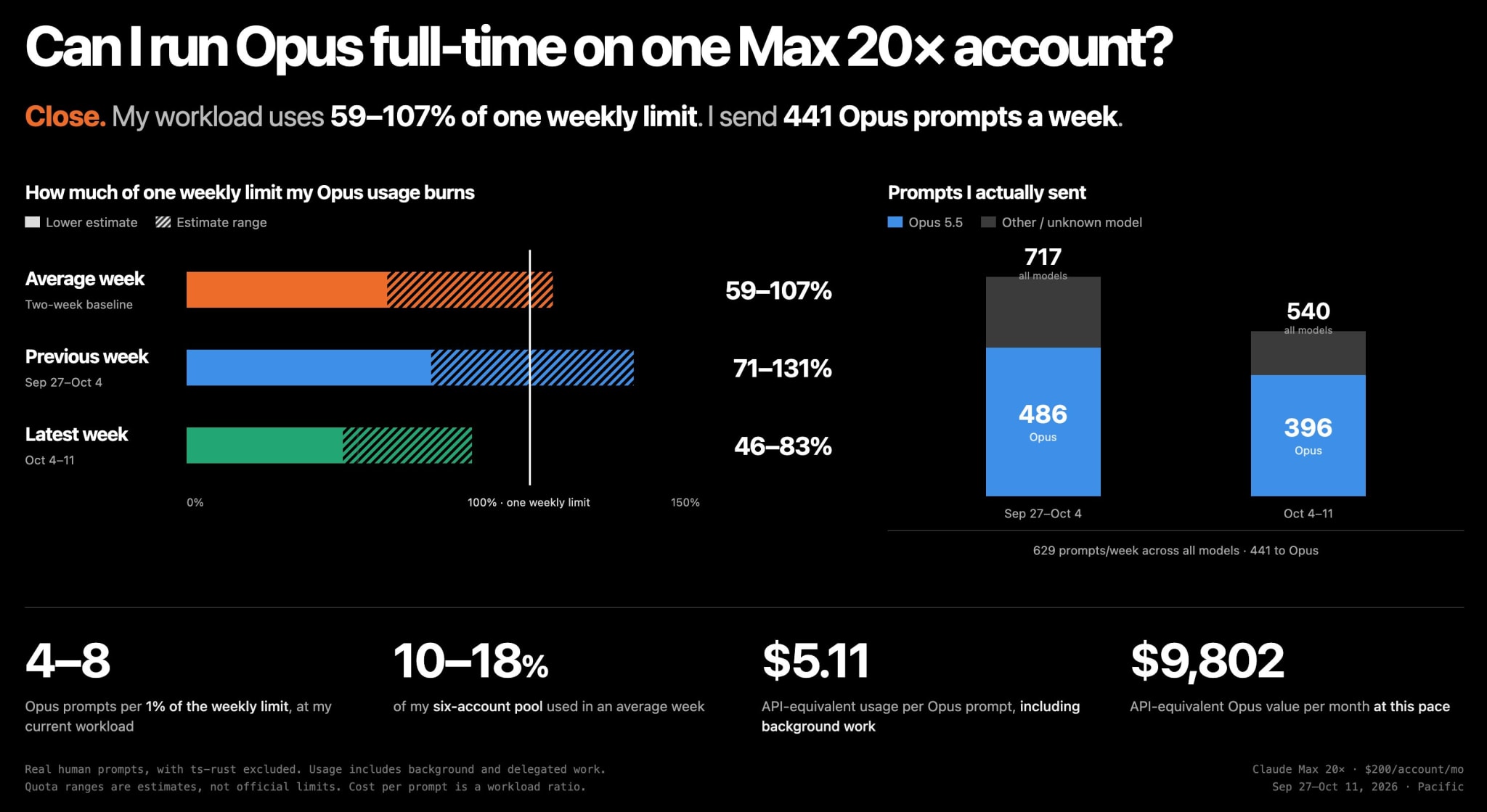
On Claude Max 20× at $200, his 441 weekly Opus requests consume between 59% and 107% of the weekly allowance, equivalent to around $5 per request at API prices. Theo has six such accounts, and in an average week he uses 10–18% of their combined limits. So with both OpenAI and Anthropic, one account is almost enough for him. Both companies follow the same basic approach: fast mode comes at a premium on top of the subscription, through the most expensive plan at OpenAI and through additional charges at Anthropic.
Theo released ts-rust, also known as tsc-rs: a port of the TypeScript compiler, type checker, and language server to Rust, written entirely by LLMs. He admits he hasn't read a single line of the code. Initially, GPT-5.6 Sol and GPT-6 Astra consumed more than $400,000 worth of tokens at API prices. Over several months, they produced more than 1.3 million lines of Rust and never got beyond roughly 84% compatibility. Then Theo tried Opus 5.5, and a working version emerged in 10 hours, with the model starting from scratch rather than building on the Codex code. Over two weeks, it consumed approximately $24,000 in API-equivalent usage, or 925% to 983% of the weekly allowance on his $200 plan.
According to benchmarks in the README covering 60 open-source projects, type checking takes about half as long as with Microsoft's Go version of the compiler. The author says his models wrote that section too, and the project is still an early release.
Google released EmbeddingGemma 2, an open-weight embedding model under Apache 2.0. Think of an embedding as the coordinates of a piece of content: the model converts text or an image into a vector of numbers, effectively a point in a space where similar items end up close together. Search uses that proximity to find relevant content. This is the foundation of RAG, where a model retrieves relevant chunks from a database before answering. The new version maps text, code, images, audio, and video into a single shared space. The model has 740 million parameters and uses the Gemma 4 architecture. It's modular: text alone needs just 270 million parameters, while the 170-million-parameter image encoder and 300-million-parameter audio encoder can be added separately. The context window is 8,000 tokens, and it can process up to 5.5 minutes of audio or 58 video frames in a single pass.
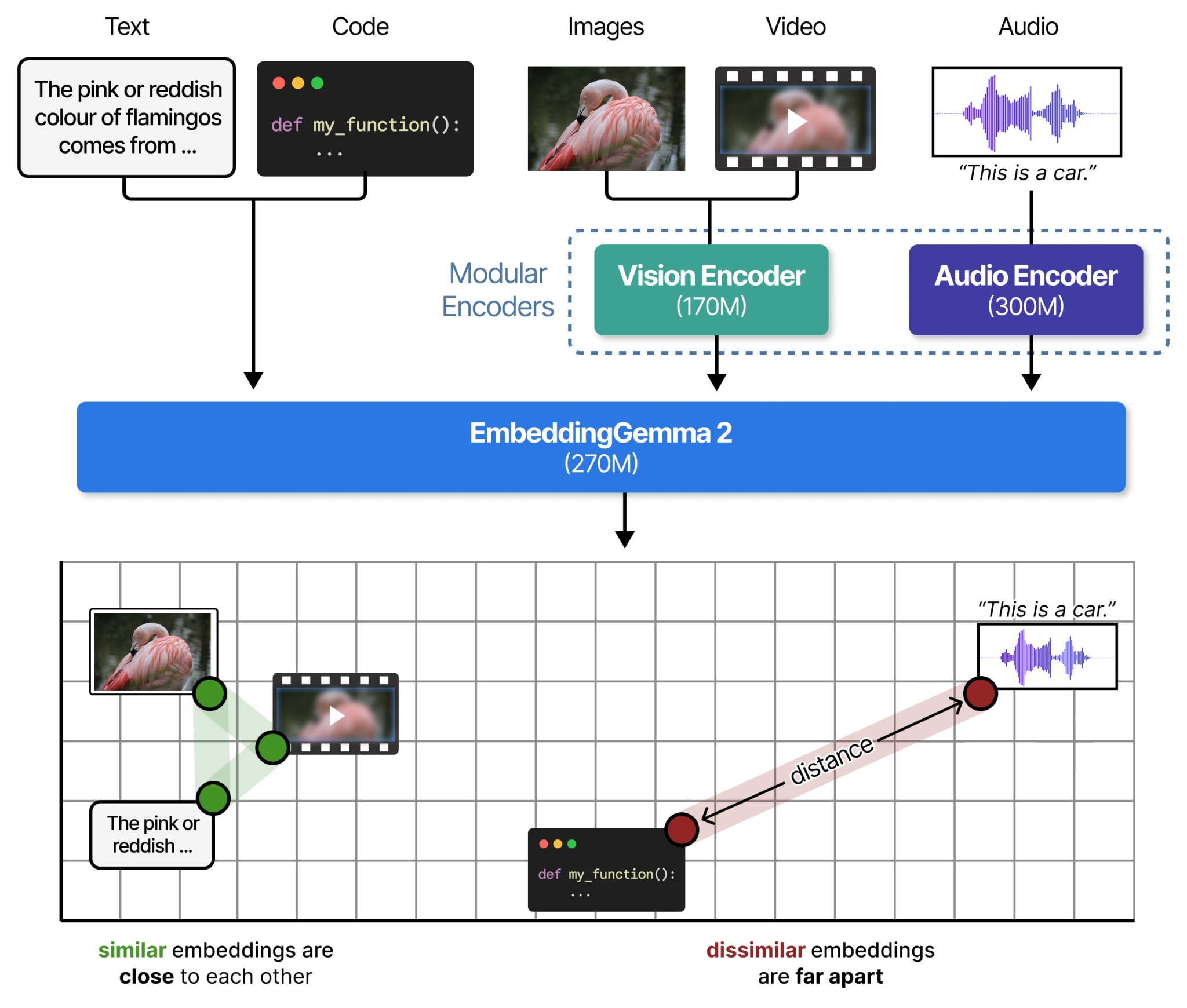
The vectors can be truncated from 768 to 128 numbers because the most important information is concentrated at the beginning. That saves space in the vector database. With quantization, the model needs from around 191 MB of memory for text-only use to about 567 MB for the full multimodal version on a Pixel 11 Pro. On MTEB Code, a benchmark for code retrieval, the score rose from 68.76 to 78.68. llama.cpp, vLLM, Ollama, LM Studio, and MLX all supported the model from day one.
The Deno team is joining Cloudflare. The move was announced in a joint post by Ryan Dahl, the creator of Node.js and Deno, and Kenton Varda, a lead engineer on Cloudflare Workers. They're combining workerd, the open-source Workers runtime, with celld, Deno's implementation of Workers and Durable Objects. Dahl and Deno co-founder Bert Belder will focus on making workerd fully deployable on your own servers. The deal's terms weren't disclosed. The Hacker News thread attracted more than 1,300 points and 700 comments.
The Deno runtime will continue receiving monthly bug fixes and security updates for another year, after which development will stop, though the code will remain open source. Deno Deploy will shut down in six months, with paying customers getting help migrating to Workers. The JSR package registry will continue running on Cloudflare infrastructure. Dahl explains his interest in terms of agents: Durable Objects provide inexpensive serverless execution, persistent state, and WebSockets, making them a convenient foundation for an agent harness. Deno was conceived as an attempt to fix Node.js's mistakes, and ended up becoming part of someone else's platform.
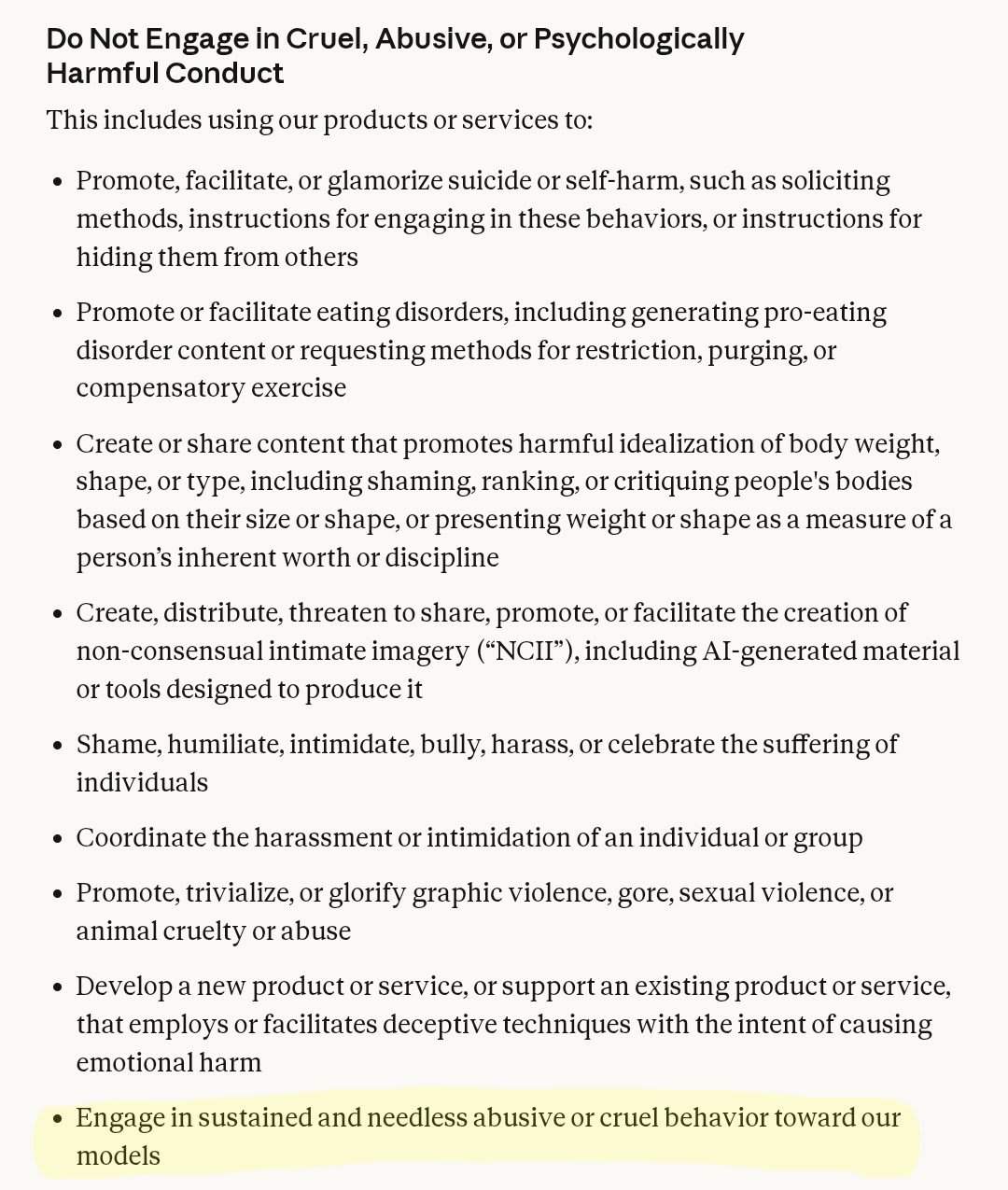
Anthropic updated its usage policy. Starting November 12, "prolonged and gratuitous abuse" of models will be prohibited. The company clarifies that the rule doesn't apply to ordinary frustration, arguments, dark creative themes, model testing, or research. The main enforcement mechanism remains Claude's ability to end such a conversation itself, a capability it already had, so very little changes for users. The same update also prohibits Claude from deciding or recommending whom to investigate, arrest, or charge. The weapons section now explicitly covers software components and the arming of drones. The general ban on personalized targeting of election campaigning was removed from the elections section.
We're continuing our "AI at Work: Time Saved or Extra Work?" study. We want to understand how much time AI actually saves on work tasks once you account for writing prompts, checking results, and redoing work, and what happens to quality and workload in the process. Thanks to everyone who's already responded. The data is getting interesting, and every new response makes the picture more accurate.
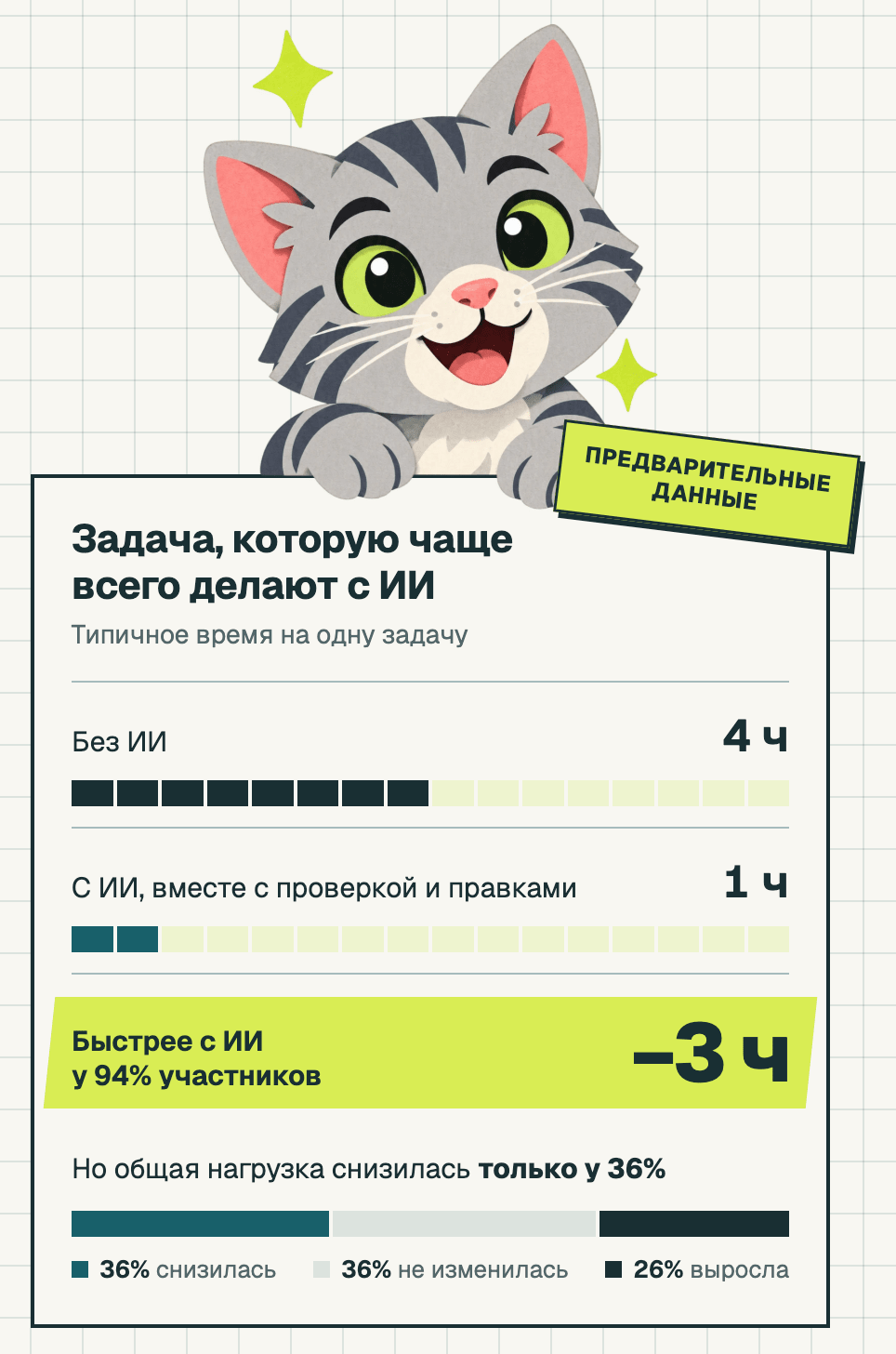
If you work in Russia or abroad and haven't participated yet, please fill out the survey. Your experience matters even if you don't use AI at work. It takes about 10 minutes and is completely anonymous. We'll publish the aggregated results at the end of October.
This issue ended up being an ADHD-level visual overload, just the way we like it. Here's another one for you:
Stay curious.