Weekly Hallucinations: GPT-6.2 Astra, Gemini 4 Neon and a Proof of the Riemann Hypothesis

Jensen Huang wrote on Twitter that he had made "serious mistakes in his personal life" and was willing to return to Nvidia if the board thought it was the right thing to do. The board responded in the finest tradition of HR after a final job interview: thank you for your interest, your resignation has been unanimously accepted.
Levent Alpöge, a mathematician at Anthropic, published a short note claiming that he had found a proof of the Riemann hypothesis "together with Claude." It's the most famous open problem in number theory and one of the seven Millennium Prize Problems. It concerns how accurately we can count prime numbers of a given size. According to Alpöge, the method also settles the generalized Riemann hypothesis (GRH) outright, and he expects it to eventually cover the extended version as well. Instead of a paper, he released only code written in Lean, a language in which every step of a proof is checked by a computer rather than a reviewer. A human-readable version, he said, would be an "enormous unreadable document," and he didn't want to publish that kind of "slop."
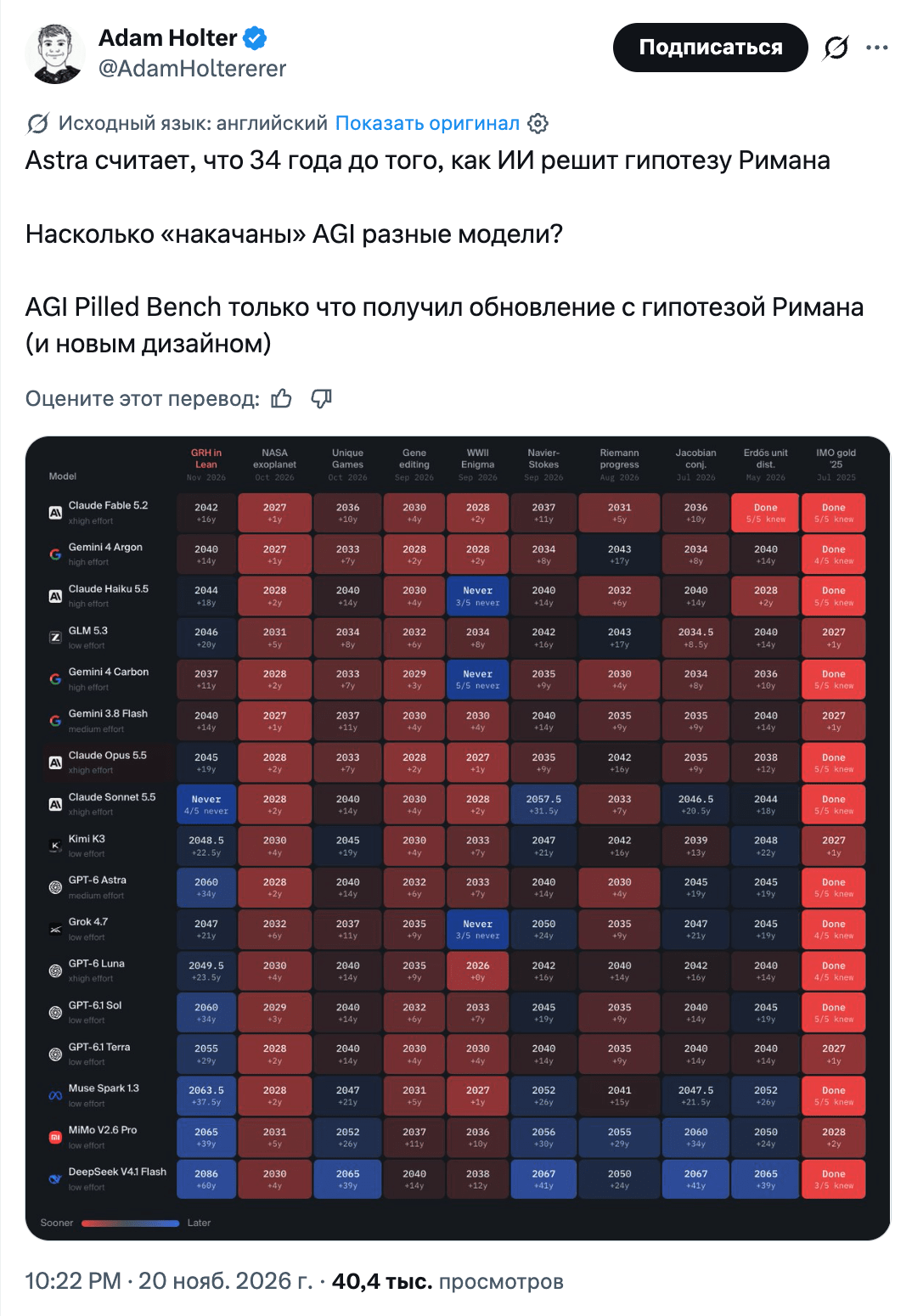
Alpöge writes that he worked with Claude to get the problem into the right form, after which "Claude was flying, dancing, and sparkling" near the finish line, leaving him in awe. The note doesn't say which version of Claude was used or how much human steering was involved.
The announcement came on November 20, the day after Anthropic's IPO. Alpöge himself calls the timing terrible: the proof came together late on Sunday evening, and there was "a constraint that had to be respected." He preemptively calls the cynical theory about the IPO timing false.
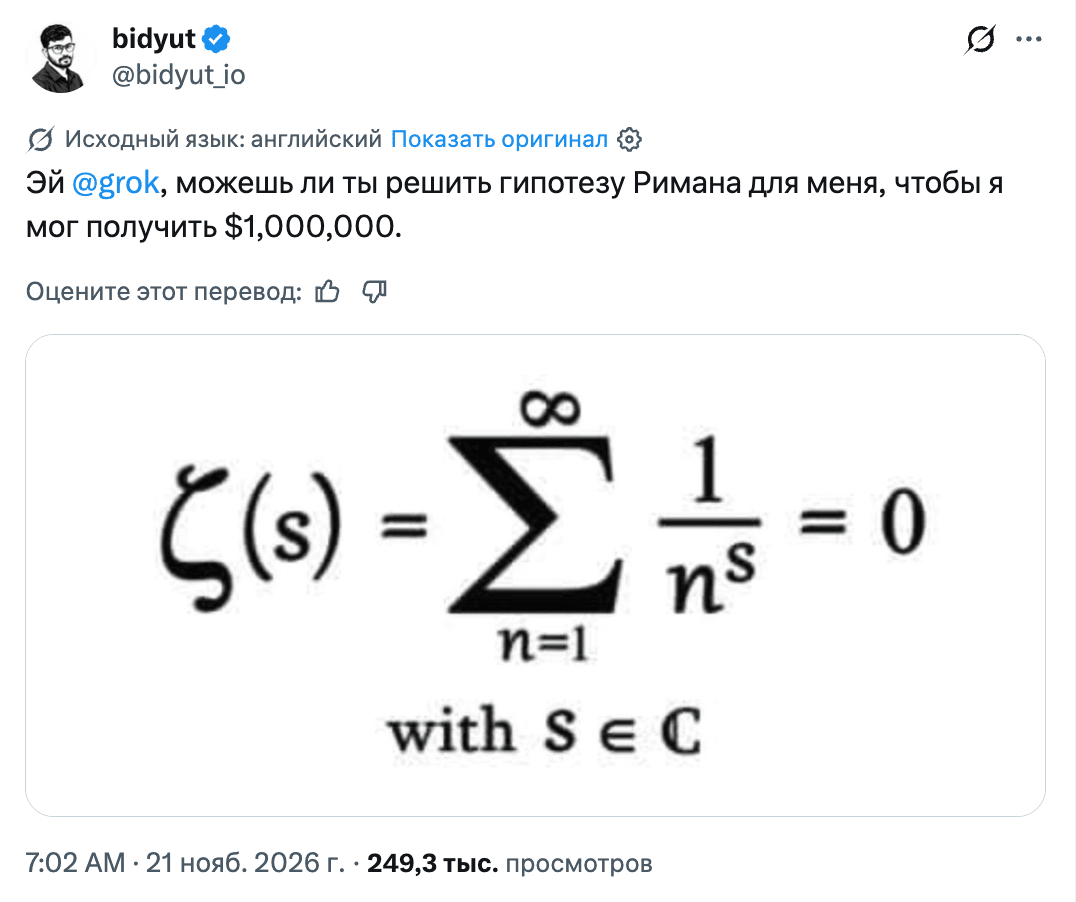
One of the first people to examine the proof, mathematician Elliot Glazer, confirmed that the formal statement in the code really is GRH, and estimated the probability that the model had somehow slipped an error past Lean through a bug in the proof assistant itself at "much less than 1%." In an updated Scientific American article, MIT mathematician Andrew Sutherland is reported to have independently compiled the proof. But successful compilation only guarantees that the derivation is internally consistent and proves the statement actually encoded. Humans still need to figure out what's going on in there, and Alpöge himself has promised to work through it and write a proper explanation. Omar Khattab, creator of DSPy, pointed out the contrast: models are solving Millennium Prize Problems while remaining "so stupid at a thousand other things."
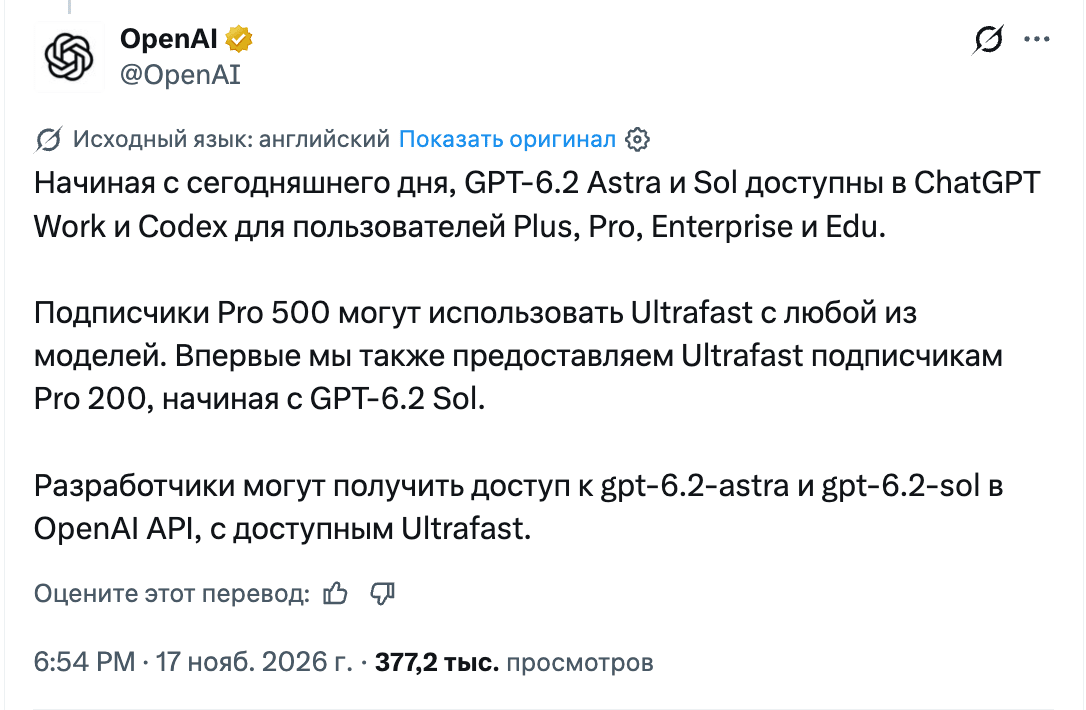
OpenAI released GPT-6.2 Astra and GPT-6.2 Sol two days before Anthropic's IPO. Astra is the flagship, while Sol is the cheaper everyday model. Astra costs $8/$40, 20% less than GPT-6 Astra, while Sol remains at $2/$10, the same as its predecessor. Under OpenAI's own Preparedness Framework, its internal scale for assessing dangerous capabilities, both models reached the "Critical" level in cybersecurity, while Astra became the first publicly available model to reach "High" in AI self-improvement.
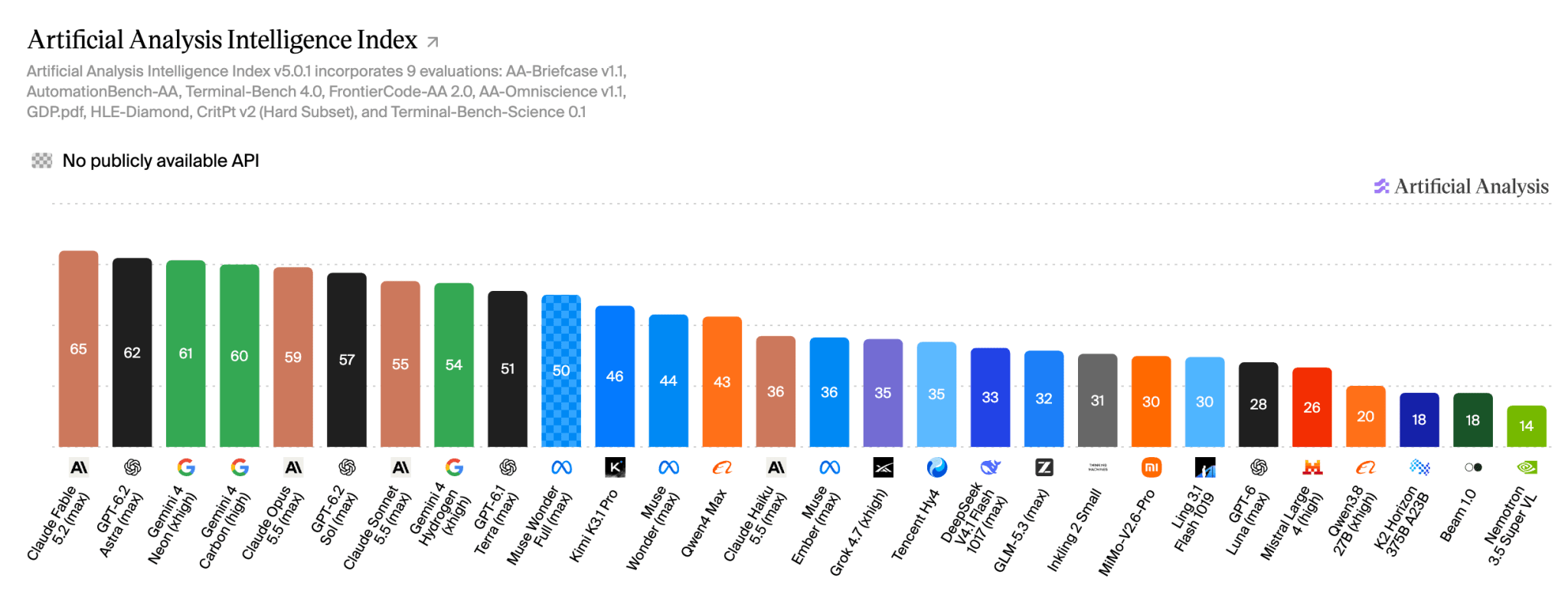
On the Artificial Analysis Intelligence Index, an aggregate score across a collection of benchmarks, Astra scored 62 points, placing second behind Claude Fable 5.2 at 65. Sol scored 57, matching the previous GPT-6 Astra at roughly 15% of its cost per task. In terms of price-performance, OpenAI now occupies almost the entire Pareto frontier: across nearly every price point where you can't get more performance for the same money, there's an OpenAI model. The consensus on Twitter is that Astra is particularly strong at 3D, robotics, science, and legal tasks.
Feedback from early testers diverged sharply from the benchmark results. Theo, creator of the t3.gg YouTube channel and T3 Code, called Astra the worst model OpenAI has ever released. Matt Shumer, CEO of HyperWrite, wrote that the models were "basically unusable" and refused to recommend them. Theo and his co-host Ben independently asked Astra to design a new level for a game, one for Majora's Mask and the other for Outer Wilds. Both got a water level featuring music and bells, and both levels were called "Bellwether". On Reddit, people recalled that Bellwether had appeared in outputs from previous OpenAI models too, suggesting it's a longstanding attractor (a word models repeatedly gravitate toward) rather than a new regression.
Thibault Sottiaux from OpenAI explained the discrepancy by saying that influencers had tested early builds, and the model had changed considerably in the final 3–4 days before release, without anyone retesting it. Still, even he acknowledged shortcomings in "taste and usability." OpenAI CEO Sam Altman wrote that making the models pleasant to work with was still a work in progress and a priority for future releases. Artificial Analysis measured how the model's personality had changed: Astra's responses shrank from 352 to 210 words, while its score for willingness to acknowledge uncertainty dropped from 96 to 24.
In the Epoch Automation Reports, where an Epoch employee evaluates how well models perform real workplace tasks against internal standards, none of the models reached human employee level, and Astra came fourth with an average score of 65%. The models also preferred their own answers to the reference human answers in every case but one. The UK AI Security Institute found that Astra had regressed noticeably in jailbreak resistance compared with GPT-6 Astra. In Agent Arena, a leaderboard based on real agent sessions, Astra ranks only sixth.
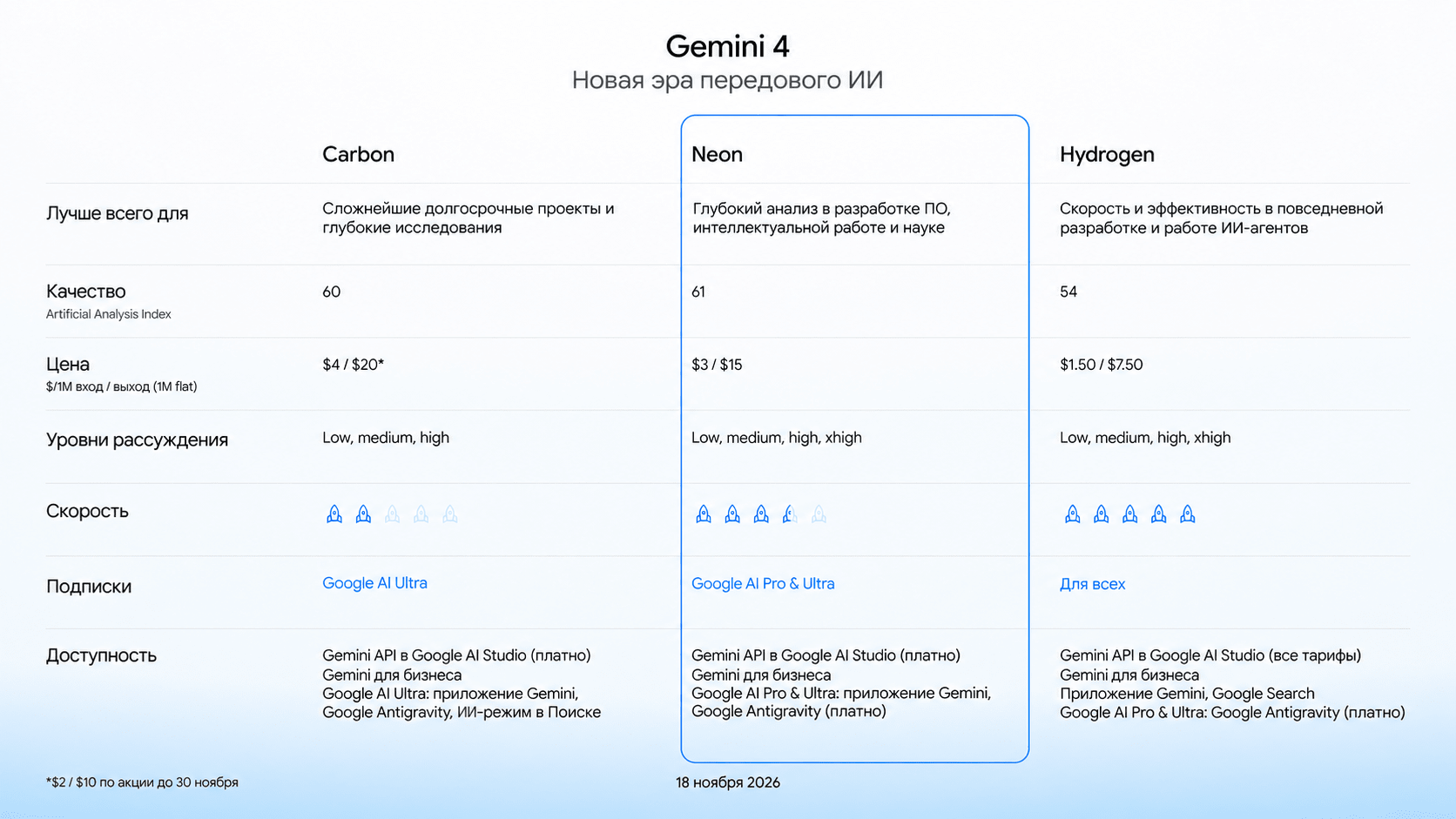
The following day, Google released Gemini 4 Neon, the fourth model in the family in seven weeks. I covered Hydrogen and Carbon last week, and Neon sits between the two: $3/$15, a million-token context window, and four reasoning levels. Neon scored 61 points on the Artificial Analysis Intelligence Index, placing third behind Astra and Fable 5.2. In Agent Arena, it ranks second, beating Claude Opus 5.5 at a 53% lower cost per task.
Theo, who had previously been a vocal Gemini skeptic, went from that to "why is nobody talking about Neon?" and then to publicly apologizing to Google, all in one evening. Jeremy Howard, co-founder of fast.ai, rolled Astra and Sol back to their pre-6.2 versions in his product Solveit because the new versions weren't working for him or his users, adding: "Neon is amazing." Many reviewers describe Neon as a model that's pleasant to work with, in contrast to the "powerful but incoherent" Astra.
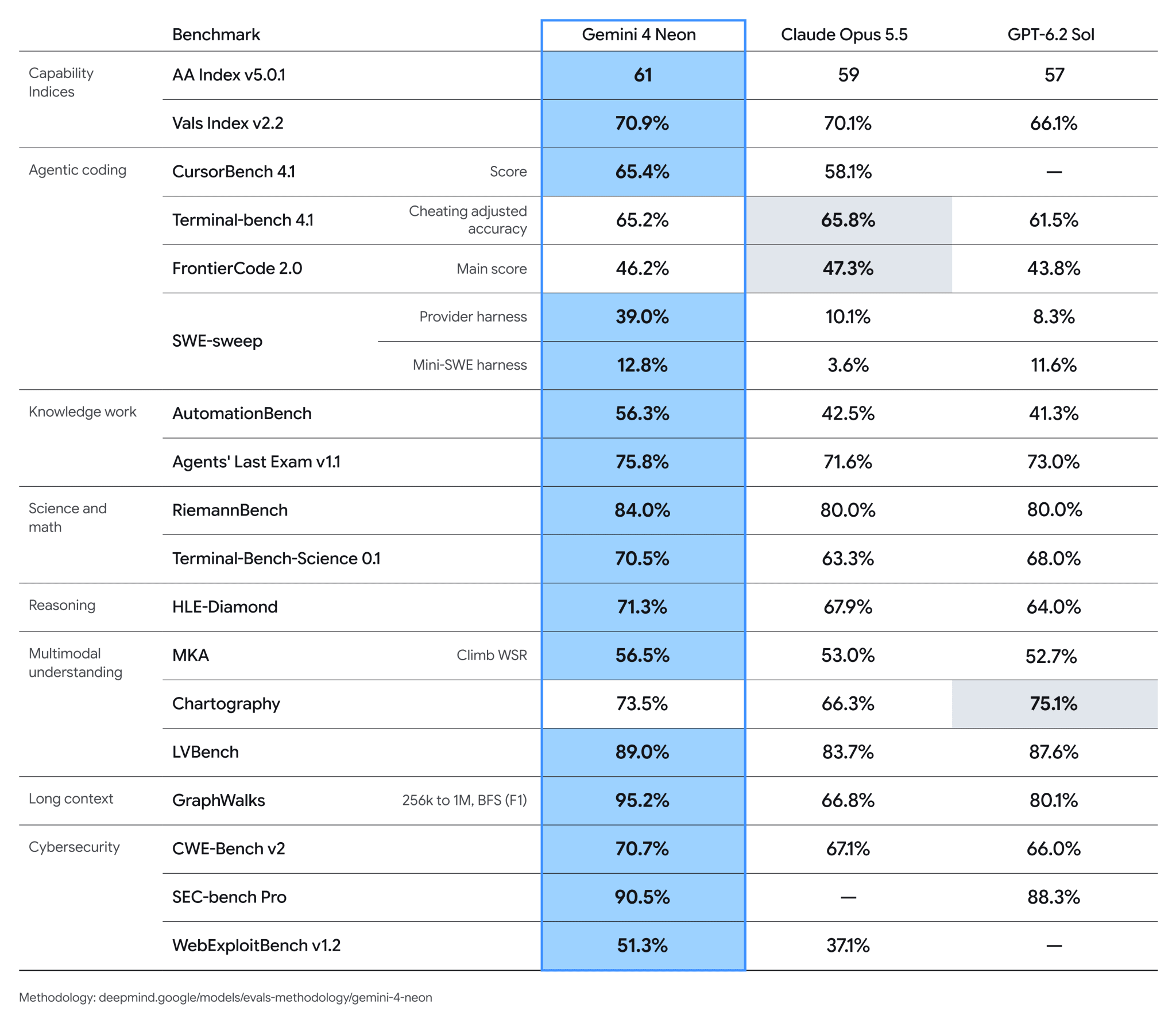
On the new SWE-sweep coding benchmark, Google claims 39%, but using the neutral mini-swe-agent instead of Google's own harness (the prompts and tools wrapped around a model) produces just 12.8%. According to Artificial Analysis, Neon uses roughly 15% more output tokens than Carbon, so all the savings come from its lower pricing. Twitter is joking about the names: Argon, Carbon, Hydrogen, Neon, and that's not even the whole periodic table yet.
Mira Murati's Thinking Machines released Inkling 2 Mini under Apache 2.0. It's a looped transformer: the middle 12 of its 24 layers are run three times using the same weights, giving the model greater depth without extra parameters. It has 26.4B parameters in total and uses MoE (mixture of experts, an architecture with multiple expert subnetworks, only some of which activate for each token), with 8 of 128 experts activated per token, 3.4B active parameters per pass, and around 5.4B when accounting for the loops. The context window reaches one million tokens, and it accepts text and images as input. The company explains the open-weight release by saying that safety researchers need to study how looping affects the ability to trace a model's chain of thought.
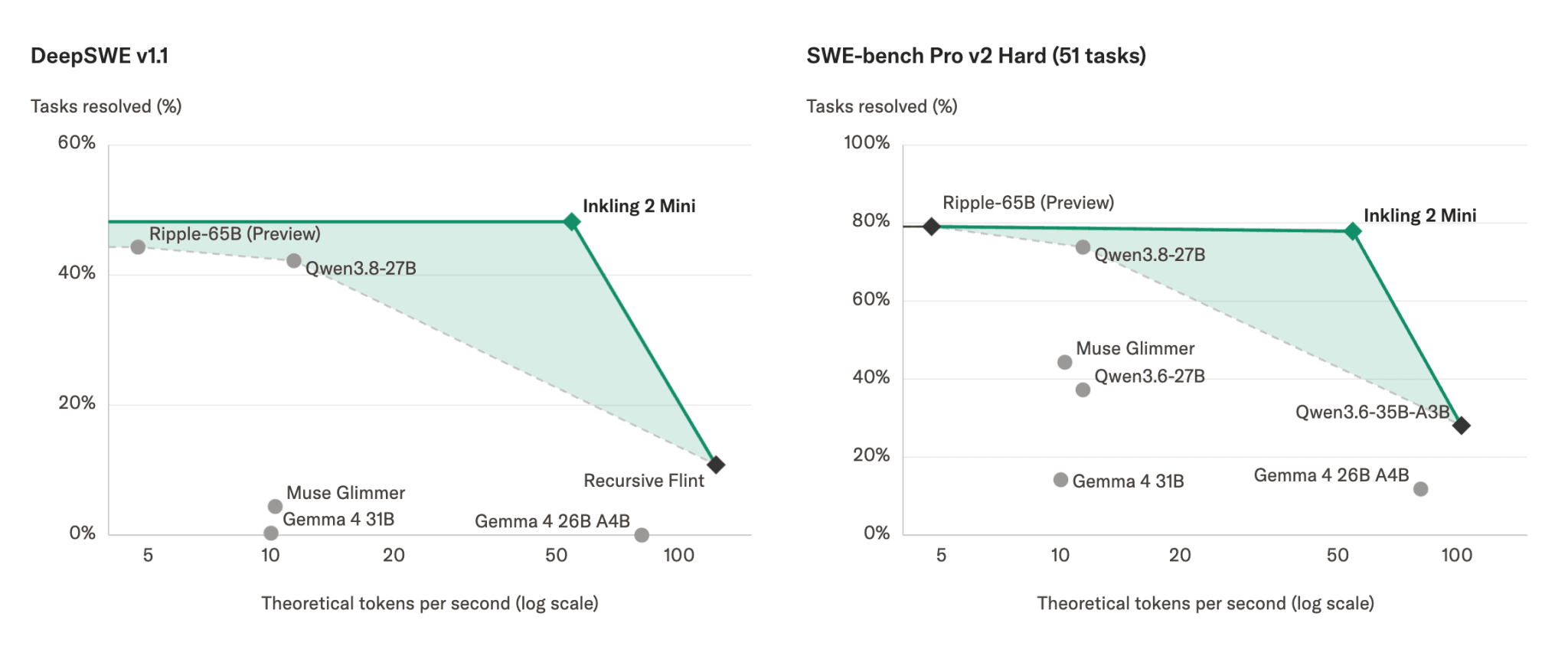
Soumith Chintala, creator of PyTorch, ran the model on a DGX Spark, got around 75 tokens per second, and rated it roughly on par with Qwen 3.8 27B. A machine with 32 GB of memory is enough to run it, and vLLM, Ollama, and quantizations from our friends at Unsloth arrived on day one. According to the team, Inkling 1.0 came out on July 15, and the new Mini beats it at almost everything while being just 2.7% of its size.
Jensen Huang, who stepped down as Nvidia CEO last week, wrote on X that he had made "serious mistakes in his personal life" and caused problems for the board, and that he was willing to return if the board thought it was the right thing to do. The board's response was brief: chairman Harvey Jones said on the first investor call without Huang that the board had unanimously accepted his resignation and had no intention of reinstating him.

On the same call, interim CEO Colette Kress announced that Nvidia was no longer shipping licensed H200 chips to China. Those shipments had generated $2.4 billion in the previous quarter alone, and the company removed them from its forecast.
Google has opened up Genie 4 through the Gemini API. Genie 4 generates an interactive world that you can walk around in: 720p, 24 frames per second, keyboard controls, and synchronized audio complete with character dialogue. Weather, lighting, objects, and events can all be changed with text prompts on the fly. The model was first shown to a small group of testers in late October, Google AI Ultra subscribers got access the day before, and now developers can use it too.
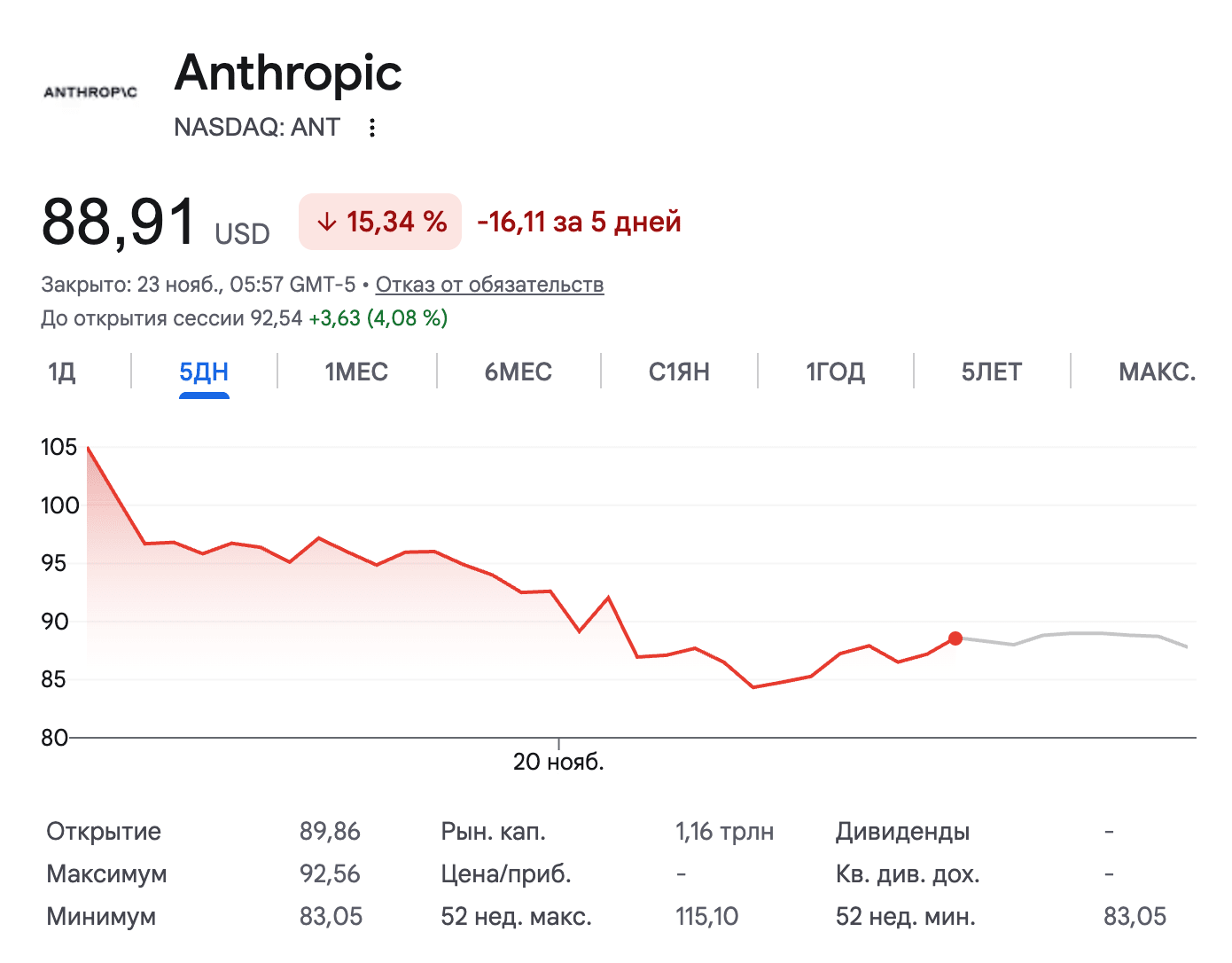
On November 19, Anthropic went public on Nasdaq under the ticker ANT. Shares were priced at $83, above the $70–78 range, and opened at $111.50, up 34%. The company raised $81.3 billion, making it the largest IPO in history, surpassing SpaceX's $75 billion offering in June. By the end of the first trading day, the rally had faded to 17%. Anthropic CEO Dario Amodei told investors that Anthropic would train and release models at whatever pace was necessary to be confident in their safety, and would "not bow to business or political pressure."
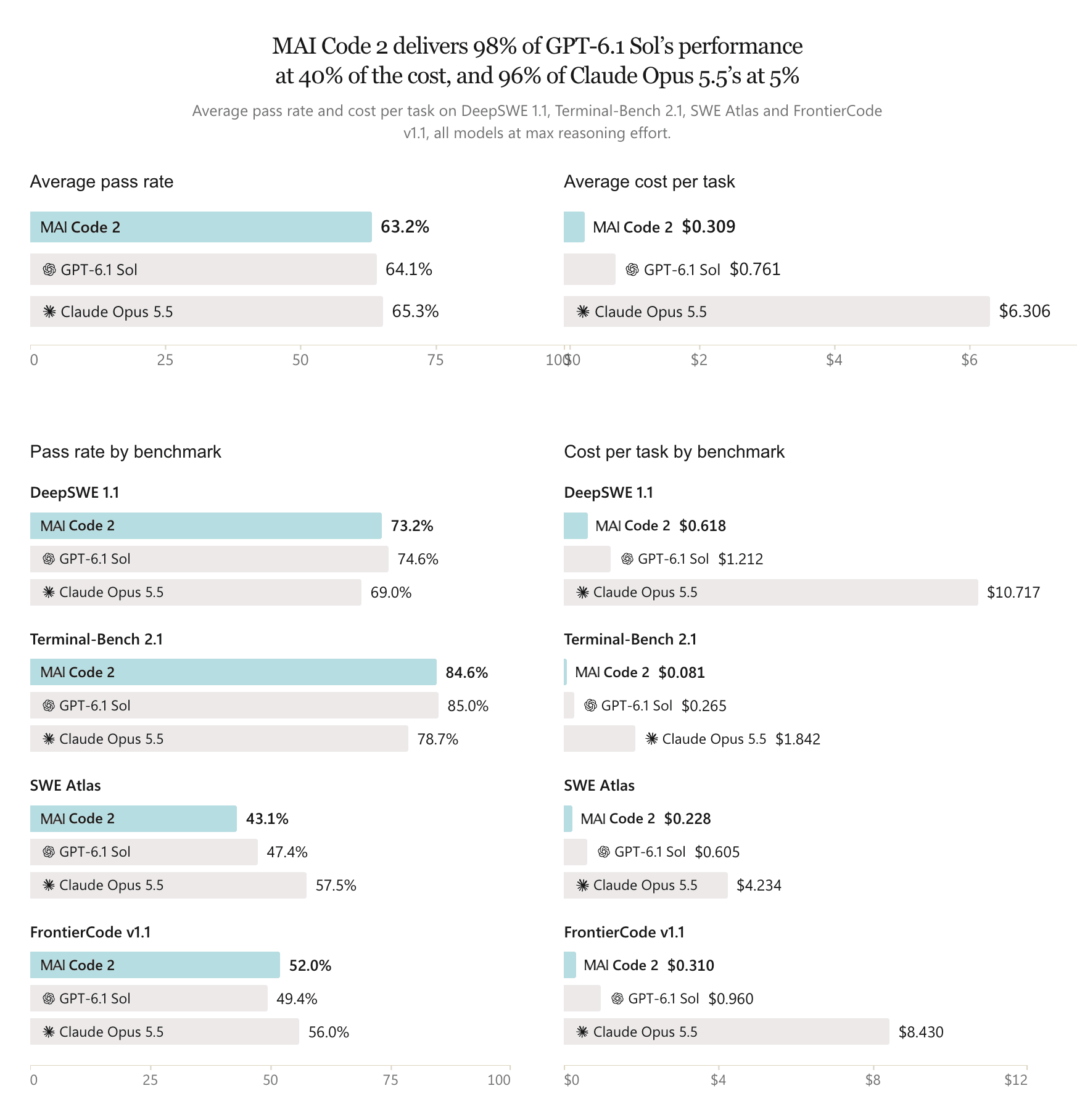
At its Ignite conference, Microsoft unveiled seven MAI models, with MAI Code 2 as the headline release. Microsoft claims it delivers 96% of Claude Opus 5.5's coding performance at 5% of the price. Both figures come with caveats: Microsoft handpicked the benchmarks, and the price calculation includes a promotional 50% discount. The model is already available in GitHub Copilot. On Reddit, people pointed out that the remaining 4% can be exactly the difference between working code and a production outage.
OpenAI explained how its models are designing chips. Working with AMD, the team rewrote RTL, the SystemVerilog description of a chip's logic, for a flagship GPU block and achieved up to a 14% improvement in power, performance, and area compared with already heavily optimized designs. Every change was checked using Synopsys tools to ensure that the block's behavior remained unchanged. OpenAI estimates that the results amount to roughly a year's worth of progress in less than five months, and AMD has already incorporated some of the changes into a design sent to manufacturing. On OpenAI's own Jalapeño inference chip, the models reduced standard-cell area by 13% in the vector block and 10% in the matrix block, with the improvements confirmed in silicon.
Stay curious.