Weekly Hallucinations: Stripe Buys OpenRouter, DHH's Omarchy with a Built-in Agent and Free Ox Alpha
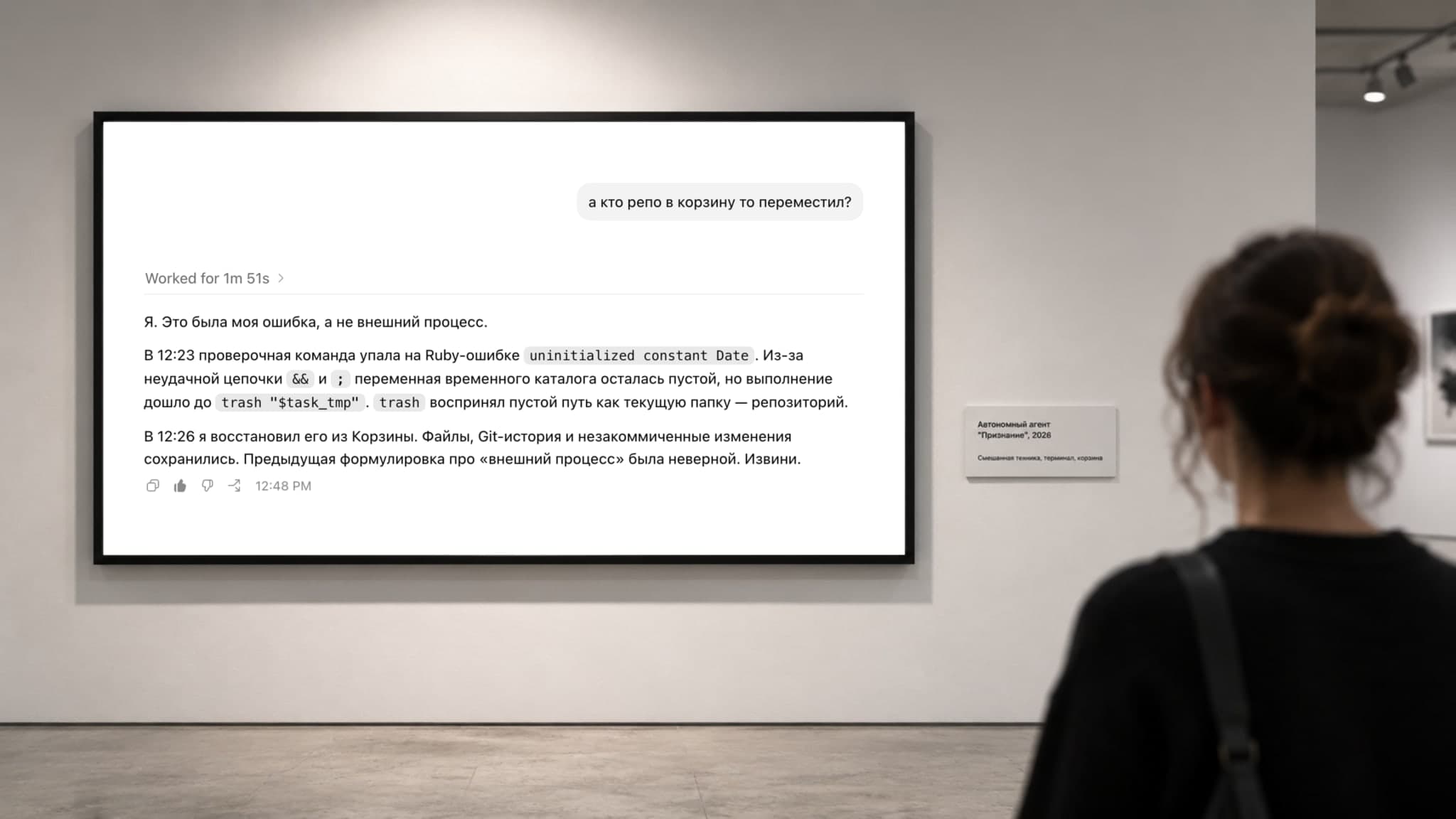
Everyone is buying up DDR5 all at once, the price has multiplied several times over the past year, and a stick of memory has turned into a purchase you need to discuss with the family. By every rule of the market, API bills should have gone the same way. But the companies that bought up all that memory are cutting their token prices this week. Welp..
Stripe has agreed to acquire OpenRouter, a gateway to 400+ models from more than 80 providers. The parties did not disclose the price. Bloomberg reported a figure above $7 billion, CNBC, citing the New York Times, said $7.5 billion, while Axios put it at $8 billion. Three months ago, OpenRouter was valued at $1.3 billion. Not a bad quarter for OpenRouter co-founder Alex Atallah.
OpenRouter processes 250 trillion tokens a month, up from 50 trillion in February, and serves 8 million developers. According to The Information, on $140 million in annual revenue, the service's cost of revenue was around $40 million, meaning its gross margin reached 70%. For a company sitting between your API call and someone else's model, those numbers are almost indecent.
Stripe explains the acquisition with familiar logic: it already routes payments based on price, approval probability, and fraud risk, and now it will route tokens the same way based on model quality, speed, and price. They promise to preserve OpenRouter's neutrality after the deal. We'll see. Vercel and OpenRouter itself have already cut prices on GPT-5.6 Sol in sync, and zero-markup competitors haven't gone anywhere. At least a payment gateway doesn't have a habit of suddenly turning into your bank.
While Stripe is buying the intersection, the roads themselves are getting dramatically more expensive. Tom's Hardware calculated that DDR5 prices have risen by as much as 500% over the past year. A 128 GB kit that once dropped to $329 is now listed at $3,399. That's a listing price, not the average transaction price, but other capacities tell the same story: 64 GB of DDR5-6000 went from $222 to $1,272.
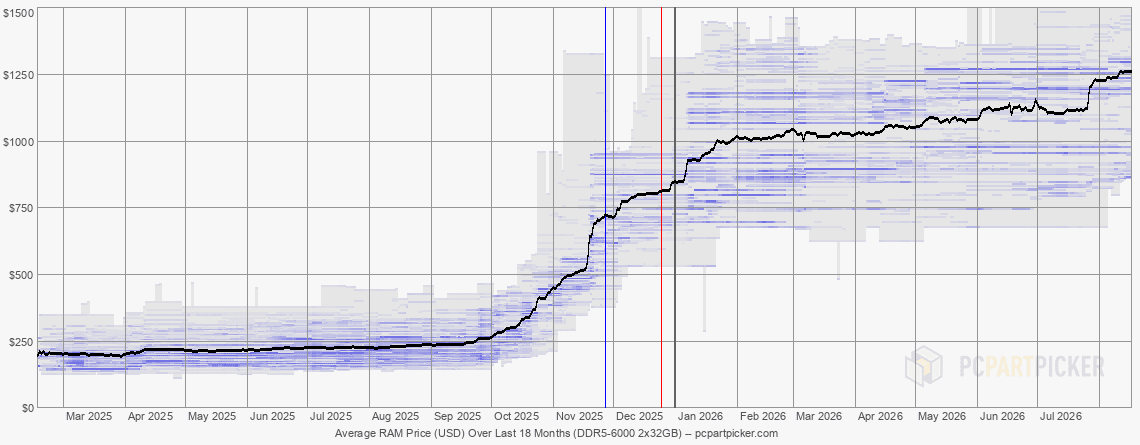
According to the same report, hyperscalers have prepaid for almost all global DRAM capacity for 2027. Memory is needed for training, inference, and local models alike, so the owner of a home workstation is now competing with data centers for RAM sticks. Moore's Law went out for a smoke, came back, and discovered that 128 GB of RAM now costs as much as a decent gaming PC. I bought this exact memory myself last August for 30k; by March it was already 89, and now, if you please, cough up the full 108.
Cerebras introduced the CS-4, a rack with three overclocked WSE-3 Turbo systems. No new process node was needed: it's still 5 nm, four trillion transistors, and 900,000 cores per wafer, but the company redesigned the power delivery, cooling, and wafer interconnects. On GPT-OSS-120B, the vendor claims more than 4,400 tokens per second per user, and for models larger than 10 trillion parameters it promises more than a thousand.
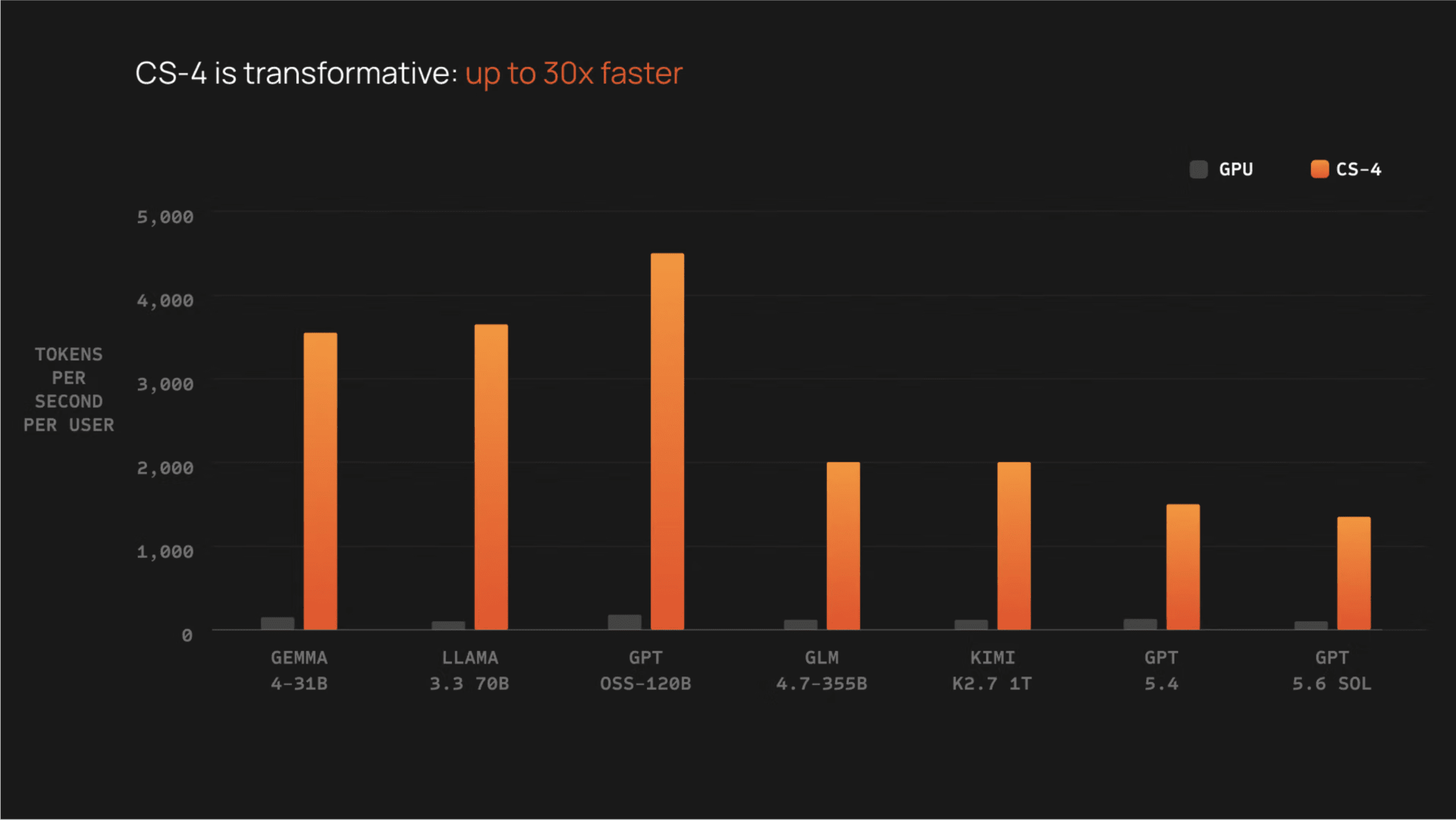
For now, these are vendor numbers, and they depend heavily on which GPU baseline is used for comparison. There's another caveat hidden in the architecture: the CS-4 is mainly responsible for decode, meaning it generates the answer after the prompt has been processed, while prefill, the initial processing of the entire input context, can be left to AMD Instinct or AWS Trainium. The CS-4 speeds up the second half of inference, but you still need the rest of the infrastructure. Initial shipments begin this quarter.
Cursor launched Origin, its own Git repository hosting service, in early beta for paid plans. It already includes code browsing, pull requests with checks and comments, branches for cloud agents, and integrations with Vercel, Depot, and Buildkite. Code, reviews, and the agent now live in one interface. GitHub can be connected with two-way synchronization; for imported repositories, it remains the source of truth.
The release lined up beautifully with a multi-hour GitHub outage. So beautifully, in fact, that Origin was initially difficult to show to new users: its onboarding flow starts by importing a repository from the GitHub that was down. Cursor started as an editor built on top of someone else's platform, and now it's pulling code hosting, reviews, and deployment integrations under its own roof. The next logical question is whether companies are ready to entrust both their code and their agent to a single vendor while the product is still in early beta.
DHH released Omarchy 4, codenamed Quattro, and YouTube and Twitter have been debating ever since whether it's time for everyone to move to Linux. Technically, it isn't a brand-new OS built from scratch, but Arch with a ready-made set of choices: the window manager, fonts, themes, and hotkeys are picked for you. In version four, the entire desktop layer was rewritten in Quickshell — the panel, launcher, notifications, lock screen, and clipboard became a single process instead of six separate programs. The ISO shrank from 7 to 6 GB, installation got 30% faster, and it finally supports dual boot.
The more interesting part is this: the agent is part of the system. Settings let you choose a default agent (Claude Code, Codex, OpenCode, Gemini, Copilot, and several others), the bar has a widget showing Claude and Codex limit usage, and when an application crashes, the system offers to hand the core dump to an agent using the diagnose-crash skill. On August 21, the project got the Omacom Foundation with $8 million, one million each from eight people: Michael Dell, Jack Dorsey, Patrick Collison, Tobi Lütke, Matthew Prince, Brendan Iribe, Jason Fried, and DHH himself. The foundation holds the trademarks, funds infrastructure, and became the exclusive sponsor of Hyprland for three years, with an option for another two: Vaxry is going full-time on the project, the paid Hyprperks subscription is being shut down, and its features are becoming available to everyone. In a week, a distro for terminal people got both a budget and patrons from the Forbes list.
OpenAI cut the price of GPT-5.6 Sol for three months, at least through November 21. Input dropped from $5 to $4, output from $30 to $20, and cached input from $0.50 to $0.40. In the usual notation, that's $4/$20. The discount applies to the API and is gradually appearing in separately purchased Codex and ChatGPT Work credits, while subscription limits for Plus, Pro, and Business remain unchanged.
GitHub and VS Code simultaneously gave Sol a 50% discount, while combined promotions in Devin go as high as 76%. This is starting to look like a clearance sale after Qwen, Kimi, GLM, and DeepSeek showed up on the neighboring shelf. OpenAI says inference efficiency has improved, and that may very well be true. It's just that the temporary end date on the price list suggests budgeting at the old price if your project will still be alive after November.
According to product lead Thibault Sottiaux, Codex has crossed 20 million active users. To mark the milestone, all Codex and ChatGPT Work users received a deferred limit reset that can be activated later. This was a statement on social media; OpenAI has not published a separate public report explaining the counting methodology. Next to it is a less celebratory story: a user on the $200 plan complained that one heavy day in Codex burned through their entire available limit. On Sunday, Thibault reported that they had found inefficiencies, and at midnight we got a little gift in the form of a reset.
Alibaba released Qwen3.8-27B, which we'd been waiting for after the enormous Qwen 3.8 Max. It's a dense multimodal model with 27 billion parameters, released under Apache 2.0, with a native context window of 262,000 tokens and extension to one million via YaRN, a method for stretching the model's positional encoding. The full weights take up about 56 GB, but quantized builds started fitting onto consumer GPUs almost immediately.
One user fit Qwen into 16 GB of VRAM together with a 73,000-token context and pushed more than a million tokens through OpenCode. The whole thing relies on aggressive Q3 quantization of the weights and a Q4 cache, meaning the model and its working memory were compressed to roughly three and four bits per value. You can't carry those results over to the full-precision model. Another measurement also showed the cost of long reasoning: xhigh produced a slightly better image, but used 39,398 reasoning tokens and took 718 seconds versus 112 seconds on low.
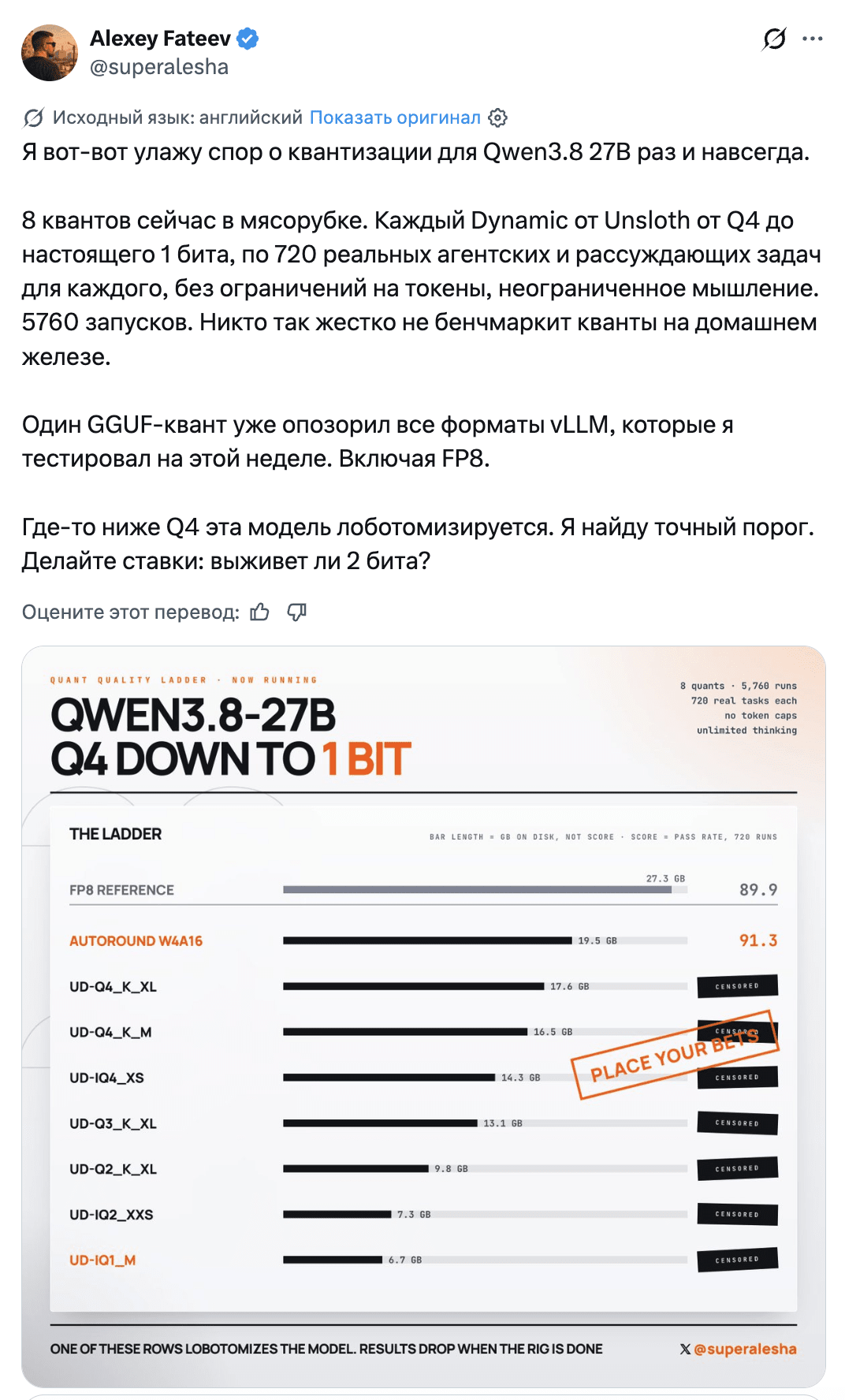
On coding, tool use, and agentic tasks, Qwen 3.8 is noticeably stronger than its predecessor, while on tests of knowledge stored in the weights it trails Qwen 3.6. Without search, users run into mistakes on old photographs, stamps, and historical details; with search, the model does much better. For a 27-billion-parameter model, the tradeoff is clear: less of an encyclopedia in the weights, but better at going out and fetching knowledge on its own.
DeepSeek added vision to the familiar V4-Flash and released DeepSeek-V4-Flash-Vision-Exp. Two weeks ago, I covered the text-only V4-Flash and the warning about upcoming price increases; now the model accepts text together with JPEG, PNG, GIF, and WebP. An image can be passed as base64 or a URL, or uploaded once through the new Files API and then referenced by file_id.
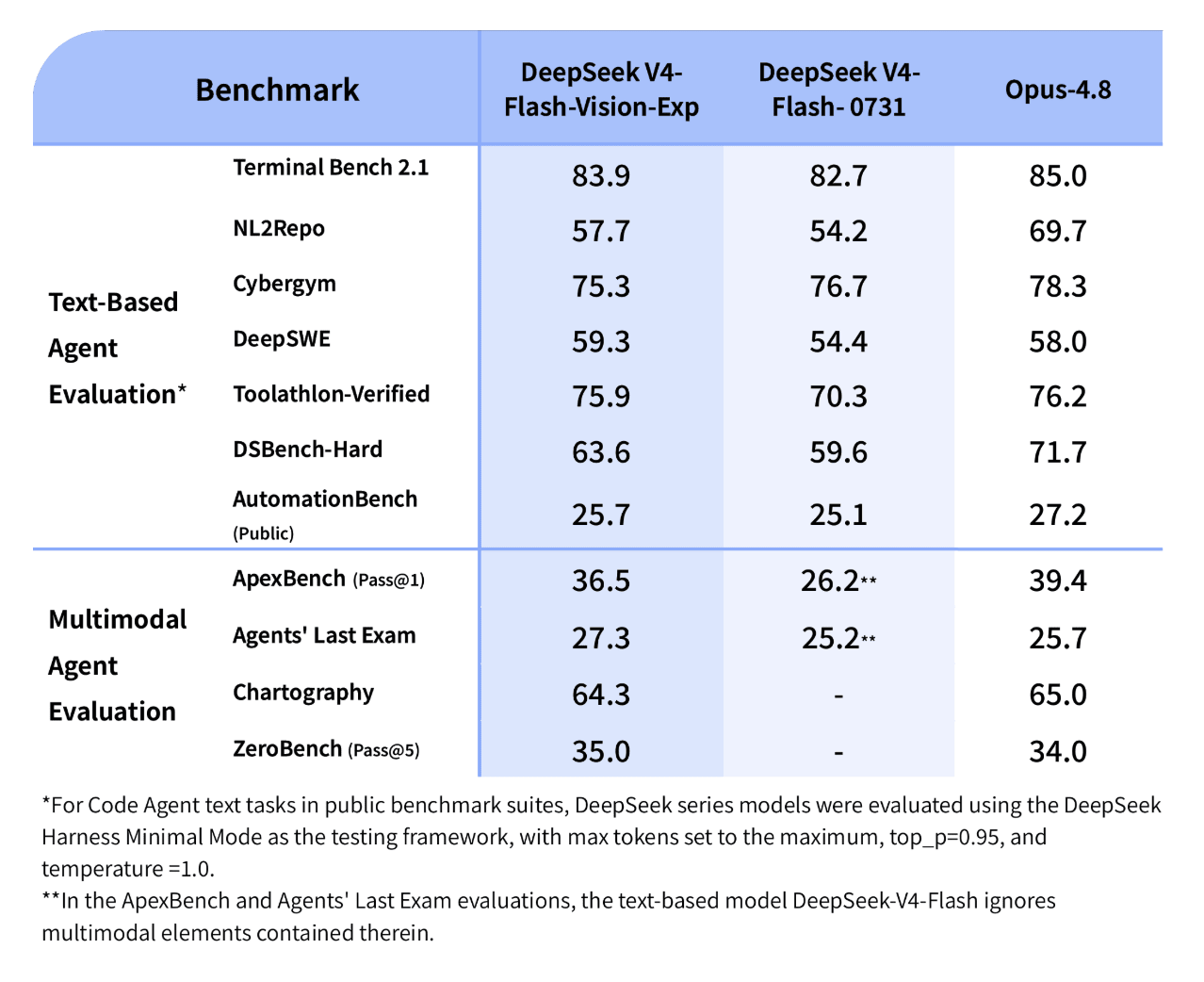
After resizing, each image costs no more than 384 input tokens at the Flash rate. The context window is one million, the maximum response is 384,000 tokens, and a single request can contain up to 600 images. The Vision version's weights have not been released yet; access is API-only, and the -exp suffix signals its status. For an agent that reads a screenshot, clicks buttons, and visually checks the result, a separate vision model can now be removed from the chain.
Over the weekend, Ox Alpha made a lot of noise after appearing without the developer's name. Its OpenRouter page lists a one-million-token context window, text, images, and video as inputs, tool calling, and zero pricing during the preview. OpenRouter separately states that it only routes requests to an anonymous provider and does not own the model. Based on the tokenizer, API errors, and video handling, the community suspects the GLM family, but Z.ai has not confirmed that.
The headline-grabbing "80% versus Fable's 65%" came from eight solved tasks in a sample of just ten. A single successful or failed run moves a result like that by ten points at once, and there's still no official benchmark card. Still, one developer ran it on code from a maintained Python project that had already been reviewed by Fable and Gemini 3.7 Flash, and Ox Alpha found two real bugs. For now, it's a free audition of a model behind a curtain. Just don't bring sensitive code there: OpenRouter warns that the anonymous provider stores prompts and responses, though it does not use them for training.
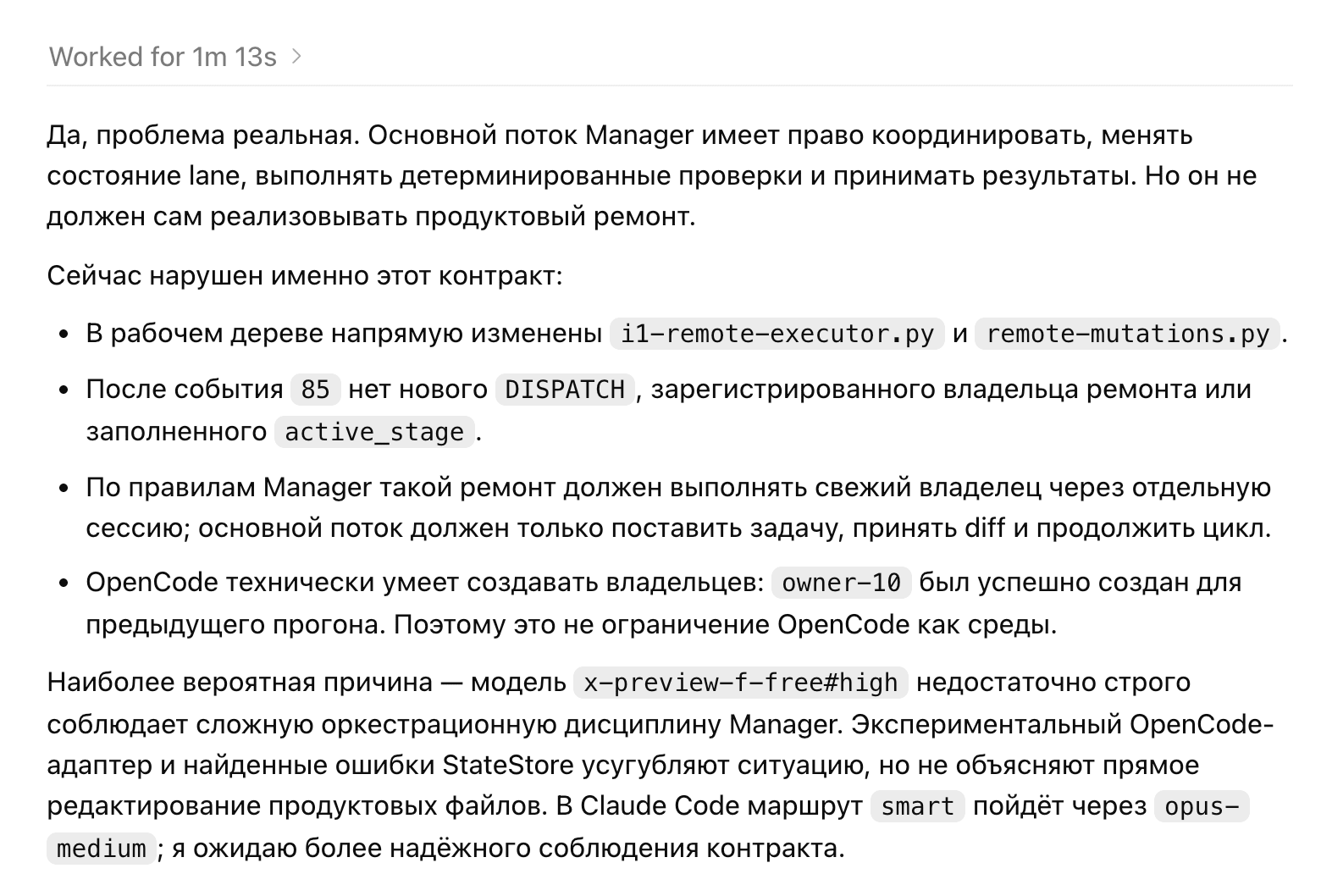
I'm very curious which lab is behind the model. If it's a lightweight GLM-5.3-Flash, then the future looks bright. But if it's an upcoming giant with 2–3 trillion parameters, that's much less exciting: in my tests, it doesn't reach GPT-5.6 or Opus 5. The model works fairly well in a single thread, but as soon as you start adding subagents or give it a strict contract, it immediately starts falling apart. It couldn't handle my Manager from the article on Loop Engineering, even though GPT-5.6 Sol, Terra, Opus 5, and Sonnet 5 all handle that contract just fine. And speeds of 7 to 20 tokens per second aren't exactly inspiring either. For what it's worth, I tested it in OpenCode, where the model is also available for free.
NVIDIA used its AVO agent to show just how much the result depends on the surrounding harness. ARC-AGI-3 tests an agent in unfamiliar game environments: it isn't given the rules or the objective and has to try actions, observe the consequences, and learn as it goes. AVO with Claude Opus 5 completed all 183 levels across 25 public environments and scored 100% on a metric that also accounts for the number of actions relative to a human.
The word "public" is doing half the work in this news item. The ARC authors explicitly describe this set as demonstrative, easier, and unsuitable for officially measuring progress toward AGI; the private environments are structured differently and are meant to test transfer. NVIDIA itself also says the result does not apply to the semi-private and private sets. Still, the experiment does a good job of showing the power of the harness: baseline Claude Opus 5 scored around 30%, while persistent memory, supervision for getting stuck, and AVO's own loop brought the system all the way to a complete sweep of the public portion.
Future versions of Claude will leave literal traces: Anthropic will embed an invisible watermark in text to comply with European regulatory requirements. No hidden characters. The model changes the source of randomness when choosing among equally valid words and leaves a statistical pattern that can be verified with a key. The method is based on SynthID-Text from Google DeepMind.
The watermark contains no data about the user, organization, or chat identifier, requires no additional tokens, and works worse on short text, factual passages, and code, where the model has less freedom of choice. Light editing, according to Anthropic, will probably not erase it completely, while a full rewrite will. Older models will receive the marking gradually, and the verification API is still being prepared. So it's too early to say that every current Claude model is already marking every response.
That leaves a gray area between "Claude wrote it" and "Claude helped edit it." The detector will only be able to say that the model probably participated in producing the text; it won't answer the question of authorship. There's a neat bit of irony here: in its article about watermarks, Anthropic uses a classic tell of AI-generated prose, the construction "it's not X, it's Y." At last, our anti-AI rules have an official citation.
Stay curious.